What Are Some Common Problems With Lithium Batteries in Golf Carts?
Lithium batteries have become a popular upgrade for golf carts because they are lighter, require less maintenance, charge faster, and generally last much longer than traditional lead-acid batteries. However, lithium does not mean problem-free.
Most issues with lithium golf cart batteries are related to battery selection, BMS protection, charging, installation, temperature, or compatibility with the cart’s electrical system.
Here are the most common problems—and what you can do about them.
1. The Battery Suddenly Stops Providing Power
One of the most confusing problems for a new lithium battery owner is a situation where the golf cart suddenly loses power even though the battery appears to have charge remaining.
This is often caused by the Battery Management System (BMS) entering protection mode.
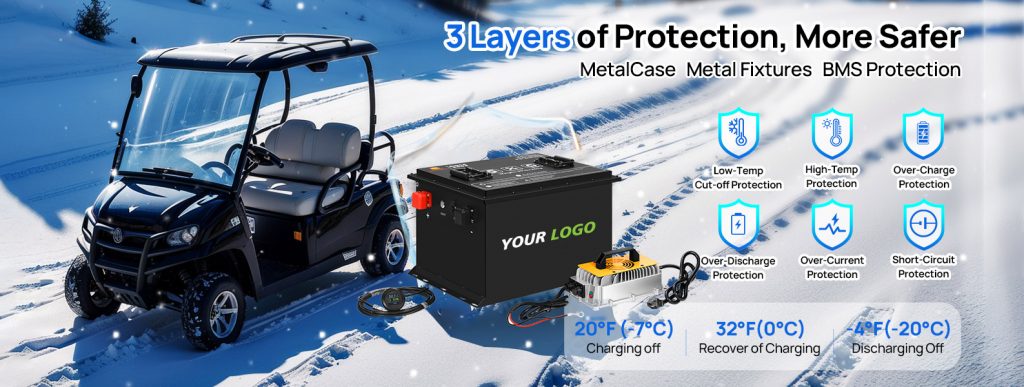
A BMS monitors conditions such as:
- Over-voltage
- Under-voltage
- Over-current
- Short circuit
- High temperature
- Low temperature
- Cell imbalance
If the BMS detects an unsafe condition, it can temporarily disconnect the battery to protect the cells.
What should you do? First, check: battery state of charge, battery temperature, charger connection, battery terminals, error codes or Bluetooth app information. If the battery has entered protection mode, follow the manufacturer’s reset procedure rather than repeatedly disconnecting and reconnecting cables.
2. The Golf Cart Does Not Go as Far as Expected
One of the biggest reasons people switch from lead-acid to lithium is increased driving range. So when a new lithium battery doesn’t provide the expected range, it can be frustrating.
However, advertised range is not a fixed number. Actual range depends on:
- Battery capacity
- Motor efficiency
- Controller settings
- Vehicle weight
- Number of passengers
- Tire pressure
- Terrain
- Driving speed
- Temperature
- Wind
- Accessories
For example, a cart traveling slowly on relatively flat terrain may travel much farther than the same cart climbing hills with four passengers.
Don’t compare Ah alone – A common mistake is comparing batteries solely by amp-hours. For example: 48V × 105Ah ≈ 5.38 kWh. The energy available from the battery depends on both voltage and capacity. That’s why a properly matched 48V 105Ah LiFePO₄ battery can provide substantially different real-world results from another battery with a similar Ah rating.
3. The Battery Won’t Charge
Another common issue is that the charger doesn’t appear to charge the battery.
Possible causes include:
- Incorrect charger voltage
- Incorrect lithium charging profile
- BMS protection
- Loose connections
- Charger malfunction
- Battery temperature outside the permitted charging range
- Battery state of charge being extremely low
Use a Lithium-Compatible Charger – A lithium golf cart battery should normally be paired with a charger specifically designed for its chemistry and voltage. For example, a 48V LiFePO₄ battery generally requires a charger designed for the battery’s actual lithium configuration. Don’t assume that an old lead-acid charger is automatically suitable simply because the cart is still a 48V cart.
4. Charging Takes Longer Than Expected
Lithium batteries generally charge faster than lead-acid batteries, but charging time depends on charger output.
A simplified calculation is: Charging time ≈ Battery capacity ÷ Charger current
For example, a 105Ah battery using a 25A charger theoretically requires approximately 105Ah ÷ 25A = 4.2 hours. Actual charging time can be somewhat longer because charging isn’t perfectly linear.
If charging suddenly takes much longer than normal, investigate: charger output, battery temperature, BMS status, cell balance, battery capacity, AC power supply.
5. Reduced Performance in Cold Weather
Lithium batteries generally perform well in normal temperatures, but low temperatures can affect charging and performance.
The biggest concern is charging a LiFePO₄ battery when the cells are below the manufacturer’s permitted charging temperature.
Many quality batteries therefore include:
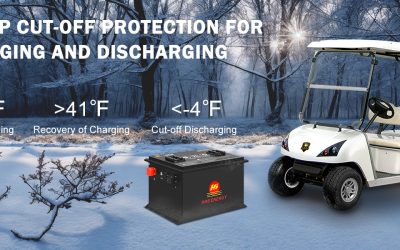
- Low-temperature charging protection
- Temperature sensors
- BMS temperature monitoring
- Optional self-heating systems
If you regularly use your golf cart in cold climates, check the battery’s specified charging temperature range before purchasing.
6. Bluetooth or Battery App Shows Incorrect Information
Some modern lithium golf cart batteries include Bluetooth monitoring. The app may display:
- State of charge
- Voltage
- Current
- Temperature
- Cycle count
- BMS status
- Fault information
However, the displayed SOC isn’t necessarily laboratory-grade measurement. Battery-management software estimates remaining capacity based on voltage, current, charge/discharge history, and other parameters.
If the displayed percentage suddenly changes, the system may need calibration or a complete charge cycle. Always refer to the battery manufacturer’s instructions.
7. Battery and Golf Cart Are Not Properly Matched
This is one of the most important issues when upgrading an older golf cart.
A lithium battery isn’t simply a replacement energy source. It becomes part of the entire electrical system. You need to consider:
- Cart voltage
- Motor voltage
- Controller current
- Charger compatibility
- Solenoid
- DC-DC converter
- Wiring
- BMS discharge current
- Regenerative braking
For example, a high-performance cart may demand substantially more current during acceleration or hill climbing than a standard cart. If the battery’s BMS cannot provide the required current, the BMS may shut down to protect itself.
8. The Battery Is Too Small for the Application
A battery can have the correct voltage but still be unsuitable for the vehicle.
Consider two 48V batteries:
- 48V 50Ah
- 48V 105Ah
Both are nominally 48V systems, but their energy capacity is very different:
- 48V × 50Ah = 2.4 kWh
- 48V × 105Ah = 5.04 kWh
In practice, a LiFePO₄ pack is often described as 51.2V nominal, giving 51.2V × 105Ah ≈ 5.38 kWh. This is why capacity should be selected according to the cart’s actual operating requirements rather than simply choosing the cheapest battery.
9. Installation Problems
A good lithium battery can still perform poorly if installed incorrectly.
Common installation problems include:
- Loose terminals
- Incorrect cable size
- Poor grounding
- Damaged connectors
- Incorrect polarity
- Improperly secured battery
- Insufficient ventilation around other electrical components
High-current golf cart systems require appropriately sized cables and properly tightened connections. If you’re unsure about installation, professional installation is preferable to experimenting with a high-current battery system.
10. The Battery Appears to Lose Capacity
Over time, every rechargeable battery experiences some degree of capacity degradation.
LiFePO₄ batteries generally have a much longer cycle life than traditional lead-acid batteries, but they aren’t immortal. Capacity loss can be accelerated by:
- Excessive heat
- Repeated deep discharge
- Prolonged storage at unsuitable SOC
- Overcharging
- Poor-quality cells
- Excessive current
- Improper BMS configuration
A quality BMS helps prevent many of these conditions.
11. Cell Imbalance
A lithium battery consists of multiple cells connected together. Ideally, these cells should remain closely matched.
Over time, differences in capacity, internal resistance, temperature, and charge state can cause cell imbalance.
A sophisticated BMS can monitor individual cell voltages and perform balancing when necessary. If cell imbalance becomes significant, you may see:
- Reduced usable capacity
- Premature BMS shutdown
- Abnormal charging behavior
- Reduced range
This is one reason cell quality and BMS design are more important than simply looking at the battery’s Ah rating.
12. Regenerative Braking Compatibility
Some modern golf carts use regenerative braking. During regeneration, energy flows back toward the battery.
That means the battery and BMS need to be capable of handling the charging current generated by the motor/controller. A battery designed for a basic golf cart isn’t necessarily suitable for every high-performance regenerative system.
Before upgrading, check whether the battery specifically supports your cart’s regenerative braking system.
13. The Battery Is More Expensive Upfront
This isn’t a technical failure, but it’s one of the biggest concerns buyers have.
A lithium golf cart battery generally costs more upfront than a comparable lead-acid battery. However, the comparison shouldn’t stop at purchase price.
Consider: initial price + maintenance + charging + replacement frequency + downtime.
A lithium battery can potentially offset its higher initial price through longer service life, lower maintenance, higher usable capacity, better charging efficiency, and reduced replacement frequency. This is why total cost of ownership is often more useful than simply comparing purchase prices.
Lithium vs. Lead-Acid: Common Problems
Lithium batteries eliminate many traditional golf cart battery problems, but they introduce a greater dependence on electronics, BMS design, and system compatibility.
How to Avoid Lithium Golf Cart Battery Problems
Before purchasing a battery, check these points:
- Confirm Your Cart Voltage – Make sure you know whether your cart is 36V, 48V, or 72V. Don’t purchase a battery based solely on physical size.
- Check the Battery Capacity – Determine how much range you actually need. For many 48V golf carts, configurations around 100–105Ah provide a useful balance between capacity, size, and cost.
- Check Continuous and Peak Current – This is particularly important for heavy carts, 4–6 passenger carts, hilly terrain, performance controllers, and utility applications.
- Verify Charger Compatibility – The charger must match the battery chemistry and voltage.
- Check BMS Features – Look for protection against overcharge, over-discharge, overcurrent, short circuit, high temperature, and low temperature.
- Consider Bluetooth Monitoring – For users who want more control, Bluetooth can provide useful information about battery status and faults.
Are Lithium Golf Cart Batteries Worth It?
For many golf cart owners, yes. The technology offers several significant advantages:
- Longer service life
- Less weight
- More usable energy
- Stable voltage
- Faster charging
- Minimal maintenance
- Smart monitoring options
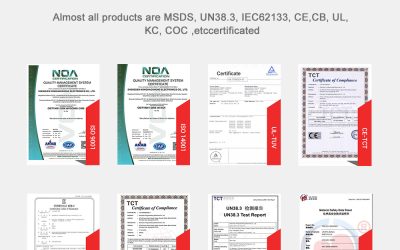
But the key is choosing a properly engineered battery that matches the cart. A low-cost lithium battery isn’t necessarily a good lithium battery. When comparing products, look beyond the Ah number and consider the cells, BMS, current capability, certifications, warranty, charger, and compatibility.
Final Thoughts
The most common problems with lithium golf cart batteries aren’t necessarily caused by lithium chemistry itself. Many problems come from incorrect installation, incompatible chargers, insufficient BMS capability, improper sizing, extreme temperatures, or choosing a battery that doesn’t match the golf cart’s electrical system.
A properly designed LiFePO₄ battery can provide years of reliable service with very little maintenance.
For anyone considering a golf cart lithium conversion, the best approach is simple: choose the right voltage → choose adequate capacity → verify BMS/current capability → use the correct charger → install it properly. Do that, and a lithium battery can turn an aging golf cart into a considerably more efficient and convenient vehicle.
Frequently Asked Questions
Upgrade your golf cart with a reliable lithium battery today!
HHS Energy offers custom lithium battery packs designed specifically for golf carts, with the right voltage, capacity, BMS protection, and charging compatibility. We evaluate your cart’s requirements and deliver a tailored solution that maximizes performance and longevity.
HHS Energy — Lithium Battery Solutions for Golf Carts & Electric Vehicles
© 2025 HHS Energy | Smart Battery Technology