Powering Golf Carts in 2026: Lead-Acid vs. Lithium-Ion Batteries, Performance, and Technology Explained
Golf carts have evolved from simple golf course transportation vehicles into versatile electric vehicles used in residential communities, resorts, farms, industrial facilities, hunting properties, and commercial fleets. As their applications expand, the battery system has become increasingly important to vehicle performance, operating costs, and reliability.
Two battery technologies continue to dominate the golf cart market: traditional lead-acid batteries and modern lithium-ion batteries. Both can power electric golf carts, but they differ significantly in energy delivery, usable capacity, weight, charging behavior, maintenance requirements, and long-term ownership costs.
In 2026, lithium iron phosphate (LiFePO₄) batteries are an increasingly important option for golf cart manufacturers, dealers, and fleet operators. However, lead-acid batteries remain relevant for buyers who prioritize lower initial costs or operate vehicles with relatively modest energy requirements.
This guide explains how golf cart batteries work, how lead-acid and lithium-ion technologies compare, and what buyers should consider when choosing a battery system.
Quick Answer: Which Battery Is Better for Powering a Golf Cart?
Lithium-ion batteries, particularly LiFePO₄, are generally better suited to golf carts that require frequent operation, consistent power delivery, shorter charging windows, and reduced routine maintenance. Lead-acid batteries remain a practical choice for applications where initial purchase price is the main priority.
The main differences include:
The right battery depends on the cart’s voltage, motor controller, daily energy consumption, charging infrastructure, and operating environment. There is no universal battery that is best for every golf cart.
1. How Does a Golf Cart Battery Power the Vehicle?
A golf cart battery stores electrical energy and supplies it to the vehicle’s electrical system. When the driver presses the accelerator, the controller regulates the electrical power delivered to the motor. The motor then converts that electrical energy into mechanical power to turn the wheels.
A typical electric golf cart power system includes several major components.
Battery Pack
The battery pack stores the energy needed to operate the vehicle. Its voltage and capacity influence how much energy is available and how long the cart can operate between charges.
Motor Controller
The controller manages the electrical power supplied to the motor. It responds to accelerator input and controls motor operation according to the vehicle’s electrical design.
Electric Motor
The motor converts electrical energy into mechanical energy. Golf carts may use different motor types and configurations, and their performance depends on the motor, controller, drivetrain, and battery system working together.
Charger
The charger replenishes the battery’s stored energy after use. Different battery chemistries require different charging parameters, so charger compatibility is essential.
Battery Management System
Lithium golf cart batteries typically include a battery management system, or BMS. It monitors important battery conditions and can protect the pack against abnormal voltage, current, and temperature conditions. These components must work together. Installing a battery with the correct nominal voltage does not automatically guarantee compatibility with the entire vehicle.
2. Understanding Golf Cart Battery Voltage and Configuration
Golf carts commonly use 36V and 48V electrical systems, although other voltage platforms are available. Traditional lead-acid battery banks are assembled by connecting individual batteries in series. Lithium golf cart batteries may be supplied as an integrated battery pack designed for a particular system voltage.
Common Lead-Acid Battery Configurations
Lead-acid golf cart batteries are commonly available in 6V, 8V, and 12V formats. The following examples show how series connections create a higher system voltage.
When batteries are connected in series, their voltages add together while the amp-hour capacity remains the same as that of an individual battery, assuming identical batteries. For example, six 8V, 170Ah batteries connected in series create a nominal 48V, 170Ah battery bank.
Lithium Golf Cart Battery Configurations
Lithium batteries are often available as integrated 36V or 48V replacement packs. LiFePO₄ products commonly use nominal cell voltages of approximately 3.2V per cell. For example:
- A 12-cell series LiFePO₄ configuration has a nominal voltage of approximately 38.4V.
- A 16-cell series LiFePO₄ configuration has a nominal voltage of approximately 51.2V.
These nominal voltages are commonly marketed for 36V and 48V golf cart systems, respectively. However, the battery’s full-charge voltage and operating voltage range must also match the vehicle requirements.
Important: Never select a replacement battery based only on the words “36V” or “48V” in a product title. Confirm the battery’s actual nominal voltage, voltage limits, charger requirements, and compatibility with the controller.
3. Lead-Acid Batteries: A Traditional Golf Cart Power Solution
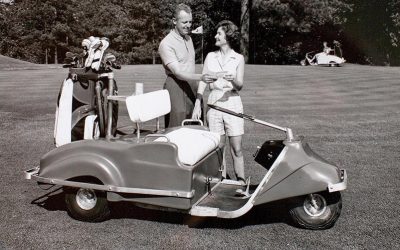
Source: sunshinestategolfcartsocala.com
Lead-acid batteries have powered golf carts for decades. Their relatively low purchase price, established supply chain, and familiarity among repair technicians make them a common replacement option. They are deep-cycle batteries, meaning they are designed to provide sustained energy over an extended discharge period rather than delivering only a brief burst of starting power.
How Lead-Acid Batteries Work
A lead-acid battery contains positive and negative lead-based plates immersed in a sulfuric acid electrolyte. During discharge, a chemical reaction converts stored chemical energy into electrical energy. During charging, an external charger reverses the reaction and restores the battery’s stored energy. The technology is mature and widely understood, but battery performance depends heavily on charging practices, temperature, discharge depth, and maintenance.
Advantages of Lead-Acid Golf Cart Batteries
Lower initial purchase price – Lead-acid batteries generally cost less upfront than comparable lithium battery systems. This makes them attractive for owners replacing an existing battery bank without wanting to invest in a complete lithium conversion.
Established availability – Lead-acid batteries are widely distributed through battery retailers, golf cart dealers, and service centers. Replacement products and maintenance knowledge are generally easy to find.
Familiar installation – Many traditional golf carts were originally designed around lead-acid battery banks. Replacing an existing bank with compatible batteries can be straightforward when the vehicle remains in its original configuration.
Recycling infrastructure – Lead-acid batteries have an established recycling network in many markets. Their lead and other materials can be recovered through appropriate recycling processes.
Disadvantages of Lead-Acid Batteries
Despite their advantages, lead-acid batteries have several limitations.
- Their weight can significantly increase the vehicle’s total mass.
- Flooded batteries require periodic electrolyte maintenance.
- Charging often takes longer, particularly near the end of the charging cycle.
- Usable capacity is limited when operators want to avoid excessive discharge.
- Capacity and performance decline with age and repeated cycling.
- Incorrect charging and prolonged storage at a low state of charge can shorten service life.
These limitations become more noticeable in golf carts used for long operating hours or demanding commercial applications.
Types of Lead-Acid Golf Cart Batteries
Not all lead-acid batteries are the same.
Flooded batteries are commonly used in traditional golf cart systems. AGM and gel batteries can reduce some maintenance requirements, but each type requires an appropriate charging profile.
4. Lithium-Ion Batteries: A Modern Way to Power Golf Carts
Lithium-ion batteries have become an increasingly popular alternative to lead-acid systems. Among the available lithium chemistries, LiFePO₄ is widely used in deep-cycle applications where cycle life, thermal stability, and dependable energy delivery are important. Unlike a traditional battery bank made from several individual lead-acid batteries, many lithium golf cart products combine the cells, BMS, terminals, and protective enclosure into one integrated pack.
How LiFePO₄ Batteries Work
LiFePO₄ stands for lithium iron phosphate. It is a lithium-ion battery chemistry that uses lithium iron phosphate as its cathode material. During discharge, lithium ions move between the electrodes, allowing the battery to deliver electrical energy to the golf cart. Charging reverses this process.
A complete golf cart lithium battery normally includes:
- LiFePO₄ battery cells
- Battery management system
- Cell balancing functions
- Temperature monitoring
- Overvoltage and undervoltage protection
- Overcurrent protection
- Protective enclosure
- Electrical terminals and connections
Some models also provide Bluetooth monitoring, LCD displays, CAN communication, low-temperature charging protection, and integrated heating systems. These additional features depend on the product design and should be verified in the manufacturer’s datasheet.
Advantages of Lithium Golf Cart Batteries
Lower weight – Lithium batteries generally weigh substantially less than lead-acid battery banks with comparable practical energy capacity. This can reduce vehicle weight and may improve payload flexibility.
More usable energy – LiFePO₄ batteries can often provide a greater proportion of their rated capacity as usable energy under the manufacturer’s specified operating conditions.
More consistent power delivery – Lithium batteries generally maintain a relatively stable voltage through much of their discharge cycle. This can help golf carts maintain more consistent performance during normal operation.
Faster charging potential – With a compatible charger and an appropriate charging current, lithium batteries can often recharge more quickly than comparable lead-acid systems.
Reduced routine maintenance – Most sealed lithium golf cart batteries do not require electrolyte watering. Their BMS also monitors important electrical conditions.
Longer cycle-life potential – Well-designed LiFePO₄ batteries can support many more charge-discharge cycles than conventional lead-acid alternatives. Actual service life depends on cell quality, temperature, discharge depth, charging practices, and product design.
Limitations of Lithium Golf Cart Batteries
Lithium technology also has considerations that buyers should understand.
- Initial purchase cost is generally higher.
- Charger compatibility must be verified.
- Battery dimensions and electrical connections must match the cart.
- BMS protection may shut down the battery under abnormal operating conditions.
- Charging below the permitted temperature range can damage LiFePO₄ cells.
- Product quality, warranty support, and safety documentation vary among suppliers.
Lithium batteries are not automatically compatible with every golf cart, even when their nominal voltage matches.
5. How Do Lead-Acid and Lithium Batteries Affect Golf Cart Performance?
The battery influences how the golf cart operates, but it is not the only factor determining vehicle performance. Motor power, controller programming, gearing, tire size, vehicle weight, terrain, and passenger load all contribute to the driving experience.
Voltage Stability
Lead-acid battery voltage generally declines as the battery discharges. Under heavy loads, voltage sag may become more noticeable. LiFePO₄ batteries typically maintain a more stable voltage over much of their discharge range. This can help maintain consistent motor operation during normal use.
Acceleration and Hill Climbing
When a golf cart accelerates or climbs a hill, the motor may demand substantial current from the battery. A lithium battery must be capable of supplying the controller’s continuous and peak current requirements. A pack with insufficient discharge capability may trigger BMS protection or limit vehicle performance. Lead-acid batteries can also experience voltage sag under high current demand. For either chemistry, buyers should evaluate the complete power system rather than assuming that a battery upgrade automatically increases speed or torque.
Battery Weight and Payload
The battery bank is a major part of a golf cart’s total weight. A lighter lithium battery may reduce vehicle mass and provide more flexibility for carrying passengers or equipment, but it does not automatically increase the vehicle’s approved payload. Always check the manufacturer’s gross vehicle weight rating, axle limits, suspension capacity, and installation requirements.
6. Battery Capacity, Energy, and Golf Cart Driving Range
Battery capacity is one of the most important factors when choosing a golf cart power system. However, amp-hours alone are not enough to compare batteries with different voltages.
What Do Voltage and Amp-Hours Mean?
Voltage represents electrical potential, while amp-hours describe how much electrical charge a battery can deliver under specified test conditions. A useful way to compare nominal energy is to calculate watt-hours:
Energy (Wh) = Voltage (V) × Capacity (Ah)
For example, consider a 51.2V, 105Ah LiFePO₄ battery: 51.2 × 105 = 5,376 Wh. This battery has approximately 5.38 kWh of nominal energy.
A 48V, 105Ah battery would have a nominal energy rating of approximately 5.04 kWh if 48V is the actual nominal voltage used for the calculation. This is why comparing only the Ah rating can be misleading.
What Determines Golf Cart Driving Range?
The distance a golf cart can travel on one charge depends on several factors:
- Battery voltage and usable energy.
- Motor and controller efficiency.
- Vehicle weight and passenger load.
- Terrain and elevation changes.
- Driving speed and acceleration frequency.
- Tire size and rolling resistance.
- Ambient temperature.
- Battery condition and age.
- Electrical accessories and auxiliary loads.
A cart traveling on a flat golf course with a light passenger load may consume considerably less energy than a lifted utility cart operating on hilly terrain.
How to Estimate Battery Energy Requirements
A practical way to size a battery is to estimate the vehicle’s daily energy consumption. For example, assume a golf cart uses approximately 2.5 kWh during a typical operating day. If the operator wants enough stored energy for that workload plus a reserve, the battery should be sized accordingly.
The required nominal battery energy can be estimated using:
Required nominal energy = Daily energy consumption / Usable energy ratio
The usable energy ratio must come from the battery manufacturer’s specifications and should account for operating conditions and the intended reserve. This approach is more reliable than choosing a battery based only on a generic mileage claim.
7. Charging Golf Cart Batteries: Lead-Acid vs. Lithium
Charging requirements are another important difference between the two battery technologies.
Charging Lead-Acid Batteries
Lead-acid batteries commonly use multi-stage charging processes, which may include bulk, absorption, and float stages. The absorption stage can take considerable time because charging current decreases as the battery approaches full charge. For flooded batteries, correct charging is especially important because improper charging can contribute to electrolyte loss, sulfation, excessive gassing, and reduced battery life.
Charging Lithium Golf Cart Batteries
LiFePO₄ batteries generally use a charging profile designed around constant-current and constant-voltage operation. Charging time depends on:
- Battery capacity
- Initial state of charge
- Charger output current
- Battery temperature
- Maximum permitted charging current
- BMS operating limits
A lithium battery should always be charged with a charger approved for that specific battery model or confirmed to meet its charging requirements.
Can You Use a Lead-Acid Charger With a Lithium Battery?
Not automatically. Some chargers can be configured for lithium battery use, but others have charging stages or voltage settings that may not be suitable. For example, equalization and desulfation functions commonly associated with some lead-acid charging systems should not be applied to a lithium battery unless the battery manufacturer specifically approves them.
Before using an existing charger, confirm:
- Output voltage
- Maximum charging current
- Charging profile
- Termination behavior
- Connector and wiring compatibility
- Any required communication between charger and BMS
The safest approach is to use the charger specified or approved by the battery manufacturer.
8. Battery Management Systems: Why BMS Matters in Lithium Golf Cart Batteries
A battery management system is one of the most important components of a modern lithium golf cart battery. Unlike a basic lead-acid battery bank, an integrated lithium battery pack needs electronic monitoring and protection to operate within its specified limits.
Main BMS Functions
Not every BMS includes every feature. Buyers should review the actual product specifications.
Continuous Current vs. Peak Current
Two important battery specifications are continuous discharge current and peak discharge current. Continuous discharge current describes the current the battery can provide under specified conditions for a sustained period. Peak discharge current describes a higher current that the battery can provide for a limited period.
Golf carts may demand higher current during acceleration, climbing, or heavy-load operation. The battery’s current capability must be matched to the controller and motor requirements. A battery with insufficient current capacity may experience voltage drops or BMS shutdowns.
Bluetooth, CAN Bus, and Battery Monitoring
Some lithium golf cart batteries provide additional monitoring and communication options. Bluetooth monitoring can allow users to check battery voltage, state of charge, current, temperature, and fault information through a mobile application. CAN Bus communication may allow compatible batteries to exchange information with chargers, displays, or vehicle systems. These features can be useful for commercial fleet operators and OEM projects, but compatibility must be confirmed at the system level.
9. Safety and Temperature Considerations
Battery selection should account for both electrical safety and environmental conditions.
Cold-Weather Charging
LiFePO₄ batteries generally have restrictions on charging at low temperatures. Charging below the manufacturer’s permitted temperature range can cause permanent cell damage. Many lithium battery systems use BMS-controlled low-temperature charging protection. Some models include self-heating functionality.
For example, Interstate’s lithium golf cart battery safety manual specifies a charging operating-temperature range of 32°F to 131°F (0°C to 55°C) for the model covered by that manual. This is a product-specific example, not a universal range for every lithium battery.
Before purchasing a battery for winter operation, check the exact charging and discharge temperature limits.
High-Temperature Operation
High temperatures can accelerate battery aging and affect performance. Golf carts used in hot climates should have batteries designed for the expected operating environment. Avoid exposing battery packs to temperatures outside their specifications, and follow the manufacturer’s installation and ventilation instructions.
Lead-Acid Safety
Flooded lead-acid batteries contain corrosive electrolyte and can release hydrogen during charging. Charging areas should be appropriately ventilated, and operators should follow battery handling procedures. Avoid sparks and open flames near charging batteries.
Lithium Battery Safety
Lithium batteries should not be disassembled or modified by unqualified personnel. Use the correct charger, protect electrical connections, and install the pack according to the manufacturer’s instructions. A BMS provides important protection, but it cannot compensate for incorrect wiring, incompatible components, physical damage, or improper installation.
10. What Is the Total Cost of Powering a Golf Cart?
The initial purchase price is only one part of the cost of operating a golf cart battery system. Lead-acid batteries generally have a lower upfront cost, but buyers should also account for maintenance, replacement frequency, charging electricity, and vehicle downtime. Lithium batteries usually require a higher initial investment, but their longer cycle-life potential and reduced routine maintenance may make them economically attractive in high-use applications.
Total Cost of Ownership Formula
Total Cost of Ownership = Initial Battery Cost + Installation Costs + Charger Costs + Electricity Costs + Maintenance Costs + Replacement Costs + Downtime Costs
Consider two hypothetical operating scenarios.
For a residential cart used occasionally, lead-acid batteries may remain a sensible option. For a golf course or rental fleet operating every day, the economic value of reduced maintenance and charging downtime can be much greater. A realistic financial comparison should use actual local electricity prices, battery quotations, maintenance records, warranty conditions, and expected operating hours.
11. Which Battery Should You Choose for Different Golf Cart Applications?
Different applications place different demands on a battery.
Golf Course Fleets
Golf course carts may operate for multiple rounds per day. Battery reliability, charging schedules, and maintenance workload are important. Lithium batteries may be attractive where vehicles need to return to service quickly and operate consistently throughout the day.
Residential Golf Carts
Residential carts often have lower daily energy requirements. If the existing lead-acid system is working well and the owner has no major range or maintenance concerns, replacing it with a compatible lead-acid bank may be cost-effective. Lithium may be worth considering when the owner wants to reduce battery weight, increase usable energy, or simplify maintenance.
Rental and Resort Fleets
Rental operations need predictable vehicle availability. Battery downtime can affect customer experience and fleet utilization. Lithium battery systems may provide operational advantages when the battery and charger are correctly matched to the fleet’s daily workload.
Utility and Off-Road Golf Carts
Utility carts used on farms, construction properties, hunting land, and industrial sites may face higher current demand and more challenging terrain. For these applications, buyers should pay particular attention to:
- Continuous and peak discharge current
- Usable battery energy
- Enclosure protection
- Mounting security
- Temperature range
- Vibration resistance
- Battery and controller compatibility
A battery designed for a standard golf course cart may not be appropriate for every modified or off-road vehicle.
12. How to Choose a Golf Cart Battery Supplier in 2026
For golf cart dealers, distributors, importers, and vehicle manufacturers, supplier selection is just as important as battery chemistry. A reliable supplier should be able to provide clear technical documentation, consistent product quality, and support for installation and system integration.
Technical Specifications to Review
Before purchasing a golf cart battery, request:
- Nominal voltage and operating voltage range.
- Rated capacity and nominal energy.
- Continuous and peak discharge current.
- Recommended charging voltage and current.
- Charging and discharging temperature limits.
- BMS protection functions.
- Dimensions, weight, and terminal configuration.
- Cycle-life test conditions.
- Warranty coverage and exclusions.
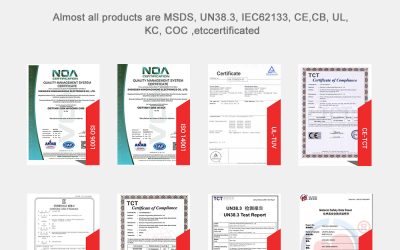
- Applicable product certifications and shipping documentation.
For fleet and OEM purchases, also consider production capacity, quality-control procedures, traceability, customization capability, and after-sales support.
OEM and ODM Lithium Golf Cart Battery Solutions
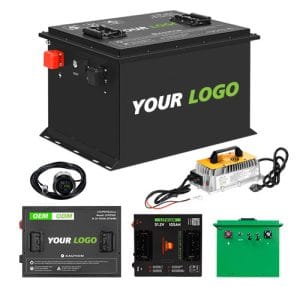
Different golf cart platforms may require different battery configurations. A standard battery may not fit every vehicle or meet every controller’s current requirements. HHS Golf Energy provides lithium golf cart battery solutions for B2B customers evaluating standard products and OEM/ODM projects.
Customization requirements may include:
- Battery voltage and capacity
- Enclosure dimensions and mounting design
- Continuous and peak discharge current
- BMS configuration
- Bluetooth or CAN Bus communication
- Charger compatibility
- Battery displays and monitoring
- Private-label branding and packaging
For a custom battery quotation, buyers should provide the golf cart model, system voltage, controller specifications, installation space, expected daily operating hours, and target battery capacity.
Explore the HHS Golf Energy Golf Cart Battery Solutions for more information.
13. The Future of Golf Cart Battery Technology
Golf cart battery technology continues to develop as manufacturers respond to demand for longer operating time, improved charging flexibility, lower maintenance, and better system integration. Several trends are particularly relevant in 2026.
More Integrated Lithium Battery Systems
Battery packs increasingly combine cells, BMS protection, monitoring, and protective enclosures into integrated products. This can simplify installation and make battery information easier to access.
Smarter Battery Monitoring
Bluetooth applications, displays, and communication interfaces allow users and fleet managers to monitor battery condition and identify potential problems more easily.
Greater Focus on System Compatibility
As more golf carts move from lead-acid to lithium, compatibility between batteries, chargers, controllers, and vehicle accessories becomes increasingly important.
More Application-Specific Battery Designs
Residential carts, golf course fleets, lifted carts, and utility vehicles do not necessarily have the same battery requirements. Battery manufacturers and OEM suppliers are therefore placing greater emphasis on application-specific voltage, capacity, current, enclosure, and communication configurations. The future of golf cart power systems will not depend on battery chemistry alone. Battery integration, charging infrastructure, monitoring, and vehicle design will all play important roles.
Frequently Asked Questions
Conclusion
The battery is the foundation of an electric golf cart’s power system. It determines how much energy the vehicle can store, how long it can operate between charges, and how consistently it can supply electricity to the motor and other electrical components.
Lead-acid batteries remain a familiar and relatively affordable option, particularly for carts with modest daily usage. Lithium-ion batteries, especially LiFePO₄, offer advantages in weight, usable capacity, voltage stability, charging flexibility, and maintenance requirements.
For buyers in 2026, the most important step is to evaluate the complete application rather than choosing a battery based on price or advertised capacity alone.
Whether you are replacing an existing battery bank, upgrading a golf cart fleet, or sourcing batteries for an OEM project, selecting the right voltage, capacity, discharge current, BMS, and charger compatibility will help create a more reliable power system.
Ready to power your golf cart with the right battery?
HHS Energy provides custom LiFePO₄ battery packs for golf carts, utility vehicles, and commercial fleets. We help you match voltage, capacity, BMS, charger, and communication to your specific application.
HHS Energy — Lithium Battery Solutions for Golf Carts & Electric Vehicles
© 2026 HHS Energy | Smart Battery Technology