Lithium-Ion vs. Lead-Acid Golf Cart Batteries in 2026: Cost, Lifespan, Performance, and Buying Guide
Choosing between lithium-ion and lead-acid golf cart batteries in 2026 involves more than comparing the purchase price. Battery technology affects driving range, charging time, vehicle weight, maintenance workload, fleet uptime, and the total cost of ownership over several years.
Lead-acid batteries remain a practical option for buyers who prioritize a lower initial investment and already have a compatible charging system. Lithium batteries, especially lithium iron phosphate (LiFePO₄), are increasingly attractive for golf courses, rental fleets, residential communities, utility vehicles, and commercial operators who need consistent performance and less routine maintenance.
The right choice depends on how frequently the golf cart is used, how much energy it needs, the available charging time, the operating environment, and the expected service life.
This 2026 guide compares both technologies across the factors that matter most, explains how to estimate long-term costs, and outlines what to check before upgrading or sourcing batteries for a golf cart fleet.
Quick Answer: Is Lithium or Lead-Acid Better for Golf Carts in 2026?
Lithium-ion is generally the stronger choice for frequent use, faster turnaround, lower routine maintenance, and long-term fleet operations. Lead-acid remains competitive when upfront cost is the primary concern and daily energy demand is relatively modest.
Here is a practical overview.
These are general characteristics, not guaranteed specifications for every battery. AGM and gel lead-acid batteries, for example, have different maintenance requirements from flooded lead-acid batteries. Lithium battery performance also varies with cell chemistry, pack design, BMS settings, and warranty conditions.
1. Understanding Golf Cart Battery Technologies
Before comparing price or performance, it helps to understand how the two battery types store and deliver energy.
What Is a Lead-Acid Golf Cart Battery?
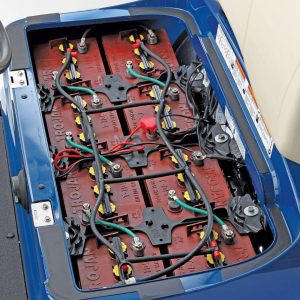
Lead-acid batteries have powered golf carts for decades. They use lead-based plates and a sulfuric acid electrolyte to store electrical energy. Their established manufacturing base, broad availability, and relatively low initial cost make them a familiar choice for replacement batteries.
Golf cart lead-acid batteries are generally available in three forms:
- Flooded lead-acid: Uses a liquid electrolyte and requires periodic water-level checks and maintenance.
- AGM (Absorbent Glass Mat): Holds the electrolyte in a fiberglass mat and is designed as a sealed, valve-regulated battery.
- Gel: Uses a gelled electrolyte and requires a compatible charging profile.
Flooded batteries are common in traditional golf cart battery banks. AGM and gel models can reduce some maintenance tasks, but their charging requirements and performance characteristics differ.
One important consideration is that lead-acid batteries are sensitive to prolonged undercharging, excessive discharge, and poor maintenance. Sulfation can reduce capacity when batteries remain discharged or are repeatedly charged incorrectly.
What Is a Lithium-Ion Golf Cart Battery?
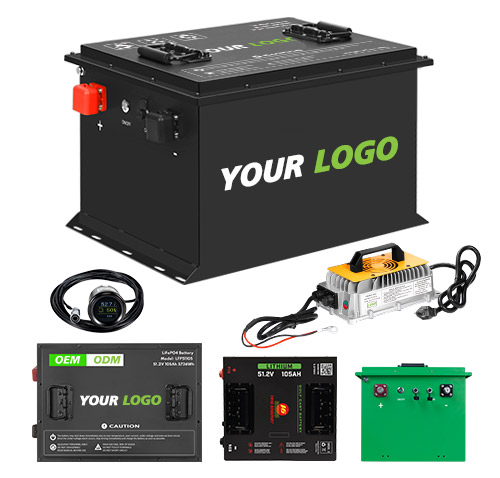
Lithium-ion golf cart batteries use lithium-based cells combined into a battery pack. For many golf cart applications, LiFePO₄ is a popular option because of its cycle-life potential and thermal stability relative to some other lithium-ion chemistries.
A complete lithium golf cart battery typically includes:
- Lithium battery cells
- A battery management system (BMS)
- Electrical connections and terminals
- A protective enclosure
- Temperature and voltage monitoring
- Protection against conditions such as overcurrent, overvoltage, and undervoltage
Depending on the product, the BMS may also provide Bluetooth monitoring, communication with a vehicle controller or charger, low-temperature charging protection, and other functions.
In 2026, lithium battery options span more than just 48V systems. Battery manufacturers continue to offer solutions for different voltage platforms and applications. Trojan, for example, announced the expansion of its OnePack lithium product family to include 36V and 72V options in January 2026, alongside its 48V offering.
This illustrates an important buying trend: battery selection increasingly involves matching the complete electrical system, not simply choosing a chemistry.
2. Lithium-Ion vs. Lead-Acid Golf Cart Batteries: Key Differences
Weight and Vehicle Performance
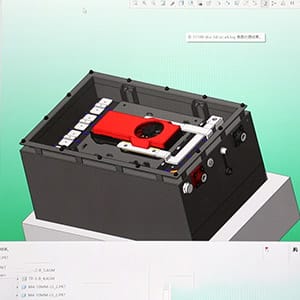
Weight is one of the most visible differences between the two technologies. A traditional lead-acid battery bank may contain several heavy individual batteries connected in series. A lithium replacement can often provide comparable usable energy in a substantially lighter package.
Reducing battery weight can help lower the golf cart’s overall mass. Depending on the vehicle design and operating conditions, this may improve handling, energy consumption, and the amount of payload available.
The effect is particularly relevant for:
- Golf course fleets operating throughout the day
- Rental carts with frequent passenger turnover
- Utility carts carrying tools and equipment
- Lifted or modified carts
- Vehicles operating on slopes or uneven terrain
However, a lighter battery does not automatically increase the cart’s rated payload. Always check the vehicle manufacturer’s weight limits, axle ratings, suspension specifications, and battery installation requirements.
Usable Capacity and Driving Range
Battery capacity is commonly expressed in amp-hours (Ah), but amp-hours alone do not tell you how much energy a battery can deliver under real operating conditions. A useful starting point is nominal energy:
Nominal energy (Wh) = Voltage (V) × Capacity (Ah)
For example, a nominal 51.2V, 105Ah battery has an energy rating of: 51.2 × 105 = 5,376 Wh, which is approximately 5.38 kWh of nominal energy.
The energy available to the vehicle will be lower than the nominal figure after accounting for operating limits, conversion losses, temperature, battery condition, and other system factors.
Lead-acid batteries are often operated with a more conservative depth of discharge to help preserve service life. A well-designed lithium pack may allow a greater proportion of its rated capacity to be used, depending on the manufacturer’s specifications.
As a result, a lithium battery with a similar nominal energy rating may provide more practical usable energy than a lead-acid bank. But actual range still depends on the cart, motor, controller, terrain, speed, passenger load, tire selection, and driving habits.
Buying tip: Compare usable energy, rated discharge current, and real operating requirements—not just the Ah number printed on the battery label.
Power Delivery and Acceleration
Lithium batteries generally maintain a more stable voltage across much of their discharge cycle. This can help a golf cart deliver more consistent performance as the battery loses charge.
With lead-acid batteries, voltage typically declines more noticeably as the battery discharges, especially under heavy loads. The driver may notice reduced responsiveness or slower performance when the battery is low.
This difference can matter when carts:
- Climb hills regularly
- Carry multiple passengers
- Transport heavy equipment
- Operate on demanding terrain
- Need predictable performance across repeated trips
Nevertheless, the battery is only one part of the power system. Motor ratings, controller limits, wiring, connectors, and drivetrain design also influence acceleration and hill-climbing ability. Replacing a battery does not automatically increase the vehicle’s permitted speed or motor power.
3. Charging Time and Energy Efficiency in 2026
How Long Does Each Battery Type Take to Charge?
Lead-acid golf cart batteries often need an extended charging period, particularly after substantial discharge. Depending on the battery bank, charger, and discharge level, a full recharge may take much of the night.
Lithium golf cart batteries can often recharge more quickly when paired with a suitable charger. The actual charging time depends on battery capacity, charger output, the battery’s permitted charging current, temperature, and how much energy must be replenished.
These are qualitative comparisons, not universal charging-time guarantees.
Why Charger Compatibility Matters
A common mistake when upgrading a golf cart is assuming that the existing charger will work with any replacement battery. Lead-acid and lithium batteries can have different charging voltage limits, charge stages, and termination requirements. Some lithium packs can work with certain existing chargers, but compatibility must be confirmed against the battery and charger specifications.
Before upgrading, verify:
- The golf cart’s nominal system voltage.
- The battery manufacturer’s recommended charging voltage and current.
- Whether the charger supports the battery’s chemistry and charging profile.
- Whether the BMS and charger can operate correctly together.
- Whether the charger has any equalization mode that must be disabled for lithium use.
Do not use a lead-acid equalization routine on a lithium battery unless the battery manufacturer explicitly provides an approved procedure. Follow the battery manufacturer’s manual for charger selection and setup.
What Does Charging Efficiency Mean for Operating Costs?
Charging efficiency affects how much electricity is needed to restore the energy used during operation. Lithium batteries can have an efficiency advantage, but exact results depend on battery design, charger performance, temperature, charging current, and operating conditions. For fleet managers, the more useful question is how much electricity the entire vehicle system consumes over a normal operating day. Track energy use across comparable routes and workloads if possible. That provides a stronger basis for estimating annual electricity costs than relying on a generic efficiency percentage.
4. Battery Lifespan: Which Type Lasts Longer?
Battery life should be evaluated in both years and charge-discharge cycles. A battery used every day on a golf course faces a very different workload from one used occasionally in a residential community. Depth of discharge, charging habits, ambient temperature, storage conditions, and maintenance all affect service life.
Lead-Acid Battery Lifespan
Lead-acid golf cart batteries can provide useful service for years when correctly selected and maintained. Their service life may be shortened by:
- Frequent deep discharges
- Leaving the battery bank partially discharged for long periods
- Inadequate charging
- Excessive heat
- Incorrect water levels in flooded batteries
- Corroded or loose electrical connections
- Mixing batteries of different ages or conditions in the same bank
Flooded lead-acid batteries require particular attention to watering and terminal condition. Trojan’s maintenance guidance recommends using distilled water, avoiding overwatering, and following the specified procedure for checking and replenishing electrolyte.
Lithium Battery Lifespan
LiFePO₄ golf cart batteries can offer a longer cycle life than many conventional lead-acid alternatives. However, the advertised cycle count must be interpreted carefully. When comparing cycle-life claims, ask:
- At what depth of discharge was the battery tested?
- What temperature was used?
- What charging and discharging rates were applied?
- What remaining capacity defines the end of life?
- Does the warranty cover the intended application and duty cycle?
A cycle-life figure without these conditions is difficult to compare fairly. Lithium batteries are not immune to degradation. Sustained high temperatures, charging outside the permitted range, excessive current, and prolonged storage at unsuitable states of charge can all affect performance and longevity.
Typical Service-Life Comparison
There is no single service-life number that applies to every battery. Use the manufacturer’s published cycle-life data and warranty terms to make a realistic replacement plan.
5. Maintenance: How Much Work Does Each Battery Need?
Lead-Acid Maintenance Requirements
Flooded lead-acid battery banks need periodic inspection and care. Typical tasks include:
- Checking electrolyte levels according to the manufacturer’s instructions
- Adding distilled water when required
- Cleaning corrosion from terminals
- Inspecting cables, connectors, and mounting hardware
- Confirming that the batteries charge fully
- Checking for leaks, cracks, swelling, or unusual heating
- Keeping the battery compartment clean and properly ventilated
Maintenance schedules should follow the battery manufacturer’s guidance and be adjusted for the actual operating environment. AGM and gel batteries generally do not require routine water addition, but they still need appropriate charging, inspection, and storage practices.
Lithium Maintenance Requirements
Lithium golf cart batteries generally require less routine maintenance because they do not need electrolyte watering. A BMS can also monitor important electrical conditions and provide protective shutdowns when configured limits are reached. Operators should still:
- Inspect battery enclosures and mounting hardware.
- Check cables, terminals, and connectors.
- Monitor battery alerts and fault codes.
- Use an approved charger.
- Keep the battery within its specified operating-temperature range.
- Verify that the battery is secured against vibration and movement.
A BMS is a protective system, not a substitute for correct system design, inspection, or operating procedures.
What Does Reduced Maintenance Mean for a Fleet?
For a golf course or rental business, fewer maintenance tasks may reduce labor hours and simplify fleet scheduling. The benefit depends on how many vehicles are in service and how much maintenance the existing battery bank requires. For a meaningful comparison, record labor time, replacement frequency, downtime, and service costs rather than assuming every lithium installation will produce the same savings.
6. Lithium vs. Lead-Acid Golf Cart Batteries: Total Cost of Ownership
The lowest purchase price does not always produce the lowest long-term cost. Lead-acid batteries usually have a lower initial price, while lithium batteries typically require a larger upfront investment. The right financial comparison includes replacement frequency, charging costs, maintenance labor, installation, downtime, and any required electrical upgrades.
Initial Purchase Price
Lead-acid batteries can be attractive when:
- The budget is limited.
- The golf cart is used infrequently.
- The existing charging system is compatible.
- The owner expects to keep the vehicle for only a short period.
- Maintenance labor and downtime have limited financial impact.
Lithium batteries may be more attractive when the vehicle is used frequently or when reduced downtime and longer service life justify the initial investment.
Build a More Accurate Cost Comparison
Use this formula to estimate total ownership cost over a selected period:
TCO = Initial battery cost + Replacement costs + Charging electricity + Maintenance labor + Installation and upgrades + Downtime costs
To compare options fairly, use the same ownership period and a similar operating workload. The following table illustrates the costs to include; it does not represent actual prices or verified savings.
Example: Why Usage Frequency Changes the Decision
Buyer A: A residential golf cart owner. The cart is used a few times a month, the current lead-acid battery bank is in good condition, and the owner has a compatible charger. Keeping lead-acid may be financially reasonable if the system meets the owner’s needs.
Buyer B: A golf course operator. The fleet runs for long hours, carts need to return to service quickly, and battery maintenance requires recurring staff time. Lithium may justify its higher initial cost through lower routine maintenance, charging flexibility, and fewer battery replacements over the selected ownership period.
The lesson is not that lithium is always cheaper. It is that the more intensively a golf cart is used, the more important lifetime operating costs become.
7. Cold Weather, Heat, and Battery Safety
Cold-Weather Operation
Both lead-acid and lithium batteries are affected by cold temperatures. Available capacity and charging performance can decline, although the extent depends on the battery chemistry and design.
For many LiFePO₄ batteries, charging below 0°C (32°F) is prohibited unless the pack has a manufacturer-approved low-temperature charging system. Charging lithium cells below their permitted temperature can cause irreversible damage. Some batteries use BMS-controlled heaters or temperature-based charging protection.
Before selecting a lithium battery for a cold climate, confirm:
- The permitted charging temperature range.
- The permitted discharge temperature range.
- Whether low-temperature charging protection is built in.
- Whether a battery heater is available or required.
- Whether the charger and BMS work together as intended.
Do not assume every lithium battery includes a heater or supports below-freezing charging.
High-Temperature Operation
High temperatures can accelerate battery aging and increase the importance of thermal management. Golf carts operating in hot climates, enclosed storage areas, or high-utilization environments should use batteries that meet the application’s temperature requirements. Keep battery compartments clear of obstructions and follow the manufacturer’s guidance for ventilation, mounting, and heat exposure.
BMS Protection and Electrical Safety
For lithium packs, the BMS should be evaluated against the cart’s real operating demands. Relevant functions may include:
- Cell overvoltage and undervoltage protection
- Overcurrent and short-circuit protection
- Temperature monitoring
- Low-temperature charging protection
- Cell balancing
- State-of-charge reporting
- Communication with compatible chargers or vehicle controllers
The precise functions differ by model. Ask the supplier for documentation rather than assuming every pack includes every feature.
Lead-acid systems also require careful handling. Flooded batteries contain corrosive electrolyte and can release hydrogen during charging. Follow the manufacturer’s safety instructions, avoid sparks and flames near charging batteries, and use appropriate protective equipment.
8. Can You Replace Lead-Acid Golf Cart Batteries With Lithium?
In many cases, yes—but compatibility must be checked before buying a replacement. A lithium battery described as a “drop-in replacement” may simplify installation, but that term does not guarantee compatibility with every golf cart model.
Check These Five Items Before Upgrading
1. System voltage – Confirm whether the cart uses a 36V, 48V, 72V, or another configuration. The replacement battery must match the system requirements.
2. Physical dimensions and mounting – Check the battery compartment dimensions, terminal positions, cable routing, mounting points, and clearance.
3. Continuous and peak current – The battery must support the motor controller’s normal current draw and peak demand. Pay particular attention to acceleration, hill climbing, and heavy loads.
4. Charger and controller compatibility – Confirm charging settings and any communication requirements. Some systems may require a compatible charger, controller configuration, wiring changes, or additional components.
5. Vehicle accessories and electrical system – Lighting, displays, DC-DC converters, auxiliary equipment, and other accessories may impose additional requirements. Confirm that the complete electrical system is compatible with the replacement pack.
Should You Replace the Entire Lead-Acid Bank?
When replacing a series-connected lead-acid battery bank, avoid replacing only one battery with a new unit while leaving the others in the same bank unless the manufacturer specifically approves that configuration. Differences in battery condition can cause charging and performance problems. Trojan advises against partial replacement of flooded battery banks.
A lithium conversion should be designed as a complete system, including battery, charger, connections, mounting, and relevant vehicle controls.
9. Which Golf Cart Battery Is Best for Different Applications?
The most suitable chemistry depends on the way the cart is used.
For a low-use cart that already works well, an immediate lithium conversion may not be necessary. For a fleet that operates for many hours per day, the value of reducing maintenance and charging downtime can be more significant.
10. What Should Dealers and Fleet Buyers Look for in 2026?
Evaluate the Supplier’s Technical Capability
Before placing an order, review:
- Product datasheets and electrical specifications
- Rated capacity and discharge-current limits
- Cycle-life test conditions
- BMS functions and communication options
- Charger compatibility
- Operating and storage temperature limits
- Warranty coverage and exclusions
- Product certifications and shipping documentation, where applicable
- Technical support and replacement procedures
- Production consistency and quality-control processes
For fleet purchases, confirm that the battery is designed for the intended duty cycle. A pack suitable for occasional residential use may not be the best choice for a rental fleet that experiences frequent acceleration, heavy loads, and repeated daily charging.
Consider OEM and ODM Battery Customization
Some golf cart manufacturers and battery distributors need more than an off-the-shelf battery. Their projects may require a particular voltage, capacity, enclosure size, terminal arrangement, BMS current rating, communication protocol, charger interface, or private-label configuration.
HHS Golf Energy provides a relevant starting point for B2B buyers evaluating golf cart lithium battery solutions and OEM/ODM requirements. Visit the HHS Golf Energy golf cart battery page to explore product options.
When discussing a custom battery project, buyers should prepare the vehicle model, system voltage, motor controller specifications, required capacity, peak current, installation dimensions, operating temperature range, and expected daily workload. These details help the supplier evaluate whether a standard pack is suitable or a custom design is needed.
11. Environmental Impact and Battery Recycling
Environmental performance should be considered across the battery’s life cycle rather than by looking at chemistry alone.
Lead-acid batteries contain lead and sulfuric acid, so they must be handled and recycled through appropriate channels. Established lead-acid recycling systems can recover substantial material for reuse, but improper handling can create serious environmental and health risks.
Lithium batteries also require dedicated collection and recycling processes. Their material composition differs from lead-acid batteries, and the most appropriate recycling route depends on battery chemistry, pack design, and local infrastructure.
When comparing the two, consider:
- Expected service life
- Electricity consumed over the operating period
- Number of replacements required
- Manufacturing and transportation impacts
- Availability of suitable recycling services
- Safe end-of-life handling
A longer-lasting battery may reduce the number of replacements over time, but the overall environmental outcome depends on real-world use and the full supply chain. Neither chemistry should be treated as impact-free.
12. How to Choose the Right Golf Cart Battery: A 2026 Checklist
Before buying or specifying a replacement battery, work through this checklist.
- ☐ Confirm the golf cart’s system voltage.
- ☐ Estimate the energy required for a normal day of operation.
- ☐ Check the motor controller’s continuous and peak current demand.
- ☐ Compare usable capacity rather than Ah ratings alone.
- ☐ Review charging time and charger compatibility.
- ☐ Confirm physical dimensions, mounting, and terminal locations.
- ☐ Check temperature limits, especially for cold-weather charging.
- ☐ Review BMS protections and communication requirements for lithium packs.
- ☐ Compare warranty terms and cycle-life test conditions.
- ☐ Estimate total cost of ownership over the expected holding period.
- ☐ Verify supplier support, documentation, and end-of-life recycling options.
For commercial buyers, the checklist should also include fleet utilization, the cost of vehicle downtime, maintenance staffing, spare-battery planning, and expected annual operating hours.
Frequently Asked Questions
Conclusion: Lithium or Lead-Acid Golf Cart Batteries in 2026?
The decision between lithium-ion and lead-acid golf cart batteries comes down to the balance between upfront cost and long-term operating requirements.
Lead-acid remains a practical option for lower-utilization carts, budget-sensitive buyers, and systems where the existing battery configuration already meets operational needs. Lithium—particularly LiFePO₄—is worth serious consideration for golf courses, rental fleets, utility vehicles, and commercial applications where charging flexibility, consistent power delivery, reduced routine maintenance, and service life matter.
For individual owners, dealers, and fleet operators, the best approach is to compare usable energy, charging requirements, compatibility, warranty terms, and total ownership costs under realistic operating conditions.
For OEMs, importers, and distributors, battery selection should also account for supplier quality, BMS configuration, system integration, and the ability to customize products for different vehicle platforms.
In 2026, the best golf cart battery is not simply the one with the lowest purchase price or the highest advertised cycle count. It is the battery that meets the vehicle’s electrical requirements and delivers dependable performance at a sustainable total cost.
Need help choosing the right golf cart battery in 2026?
HHS Energy provides custom LiFePO₄ battery packs for golf carts, utility vehicles, and commercial fleets. We help you match voltage, capacity, BMS, charger, and communication to your specific application.
HHS Energy — Lithium Battery Solutions for Golf Carts & Electric Vehicles
© 2026 HHS Energy | Smart Battery Technology