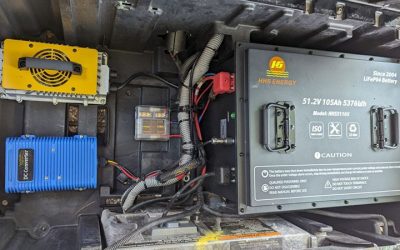

The Complete Guide to Lifespan, Factors, and Real-World Expectations
Introduction: The Longevity Advantage of Lithium
If you’re considering upgrading your golf cart to lithium power—or you’ve already made the switch—the question of lifespan is likely top of mind. After all, lithium batteries represent a significant investment, and understanding how long they’ll serve you is essential for evaluating value and planning for the future.
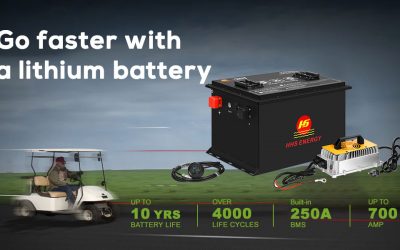
The short answer is impressive: Quality lithium golf cart batteries typically last 8–12 years, delivering 2,000 to 5,000+ charge cycles before their capacity declines to 80% of original -5-10.
But the full answer depends on several factors—how you use the battery, how you charge it, and the conditions it operates in. This comprehensive guide explores everything you need to know about lithium golf cart battery lifespan, including:
-
Exact cycle life and calendar life expectations
-
Factors that extend or reduce longevity
-
Comparison to lead-acid alternatives
-
Best practices for maximizing your investment
-
Real-world examples for different usage patterns
Part 1: Lithium Battery Lifespan Fundamentals
1.1 Understanding Cycle Life vs. Calendar Life
When manufacturers discuss battery lifespan, they refer to two distinct metrics:
| Term | Definition | Typical Lithium Value |
|---|---|---|
| Cycle Life | Number of complete charge/discharge cycles before capacity drops to 80% of original | 2,000–5,000+ cycles -5-6 |
| Calendar Life | Total years of service regardless of cycle count | 8–12+ years -9-10 |
Lithium iron phosphate (LiFePO₄) batteries—the chemistry used in virtually all modern golf cart applications—degrade through two parallel processes:
-
Cycling wear: Cumulative stress from charging and discharging
-
Calendar aging: Chemical changes over time, even when unused
The good news? Both processes are significantly slower in lithium than in lead-acid technology -4.
1.2 The Numbers: How Long Do They Actually Last?
| Battery Type | Typical Cycle Life | Expected Service Life |
|---|---|---|
| Flooded Lead-Acid | 300–500 cycles -2 | 2–4 years |
| AGM Lead-Acid | 400–600 cycles -2 | 3–5 years |
| Lithium LiFePO₄ | 2,000–5,000+ cycles -5-6 | 8–12+ years -10 |
Real-World Translation:
-
A weekend golfer using their cart 50–100 times per year could get 15–20 years from a quality lithium battery -5
-
A daily driver using the cart 200–300 times per year can expect 8–12 years of reliable service -9
-
Commercial fleet carts used 500+ times annually still achieve 5–8 years—often outlasting multiple sets of lead-acid batteries -2
1.3 The 80% Capacity Threshold
Battery lifespan is typically measured until capacity drops to 80% of original -1-3. After this point, the battery still functions but with reduced range. Most users won’t notice the gradual decline until they approach this threshold.
Example: A 100Ah lithium battery that originally provided 40 miles of range will still deliver 32 miles at the “end” of its rated life—still usable for many applications -3.
Part 2: Factors That Affect Lithium Battery Lifespan
2.1 Depth of Discharge (DoD)
How deeply you discharge your battery between charges significantly impacts cycle life.
| Depth of Discharge | Estimated Cycle Life |
|---|---|
| 100% DoD (full discharge) | 1,500–2,500 cycles |
| 80% DoD (recommended max) | 3,000–5,000 cycles -1-6 |
| 50% DoD (shallow cycling) | 5,000–8,000 cycles |
The Science: Lithium batteries experience less stress when cycled partially. While they tolerate deep discharges far better than lead-acid, regularly draining to near-empty still accelerates aging -9.
Best Practice: Recharge when your battery reaches 20–30% remaining capacity. This balances usable range with maximum longevity -9.
2.2 Charging Habits
How you charge matters as much as how you discharge.
Optimal Charging Practices:
| Practice | Impact on Lifespan |
|---|---|
| Partial charging | Beneficial—lithium has no memory effect -10 |
| Full charge to 100% | Do monthly for BMS cell balancing -1 |
| Frequent deep discharges | Reduces life by up to 40% -1 |
| Using lead-acid charger | Damages battery, voids warranty -9 |
The Monthly Full Charge: While partial charging (80–90%) is ideal for daily use, performing an occasional full charge allows the Battery Management System (BMS) to balance the internal cells, ensuring maximum capacity and longevity -1.
2.3 Temperature Extremes
Temperature is the silent factor that dramatically affects lifespan.
| Temperature Range | Effect on Lithium Battery |
|---|---|
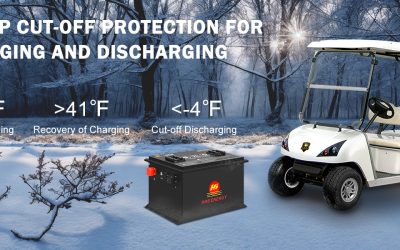
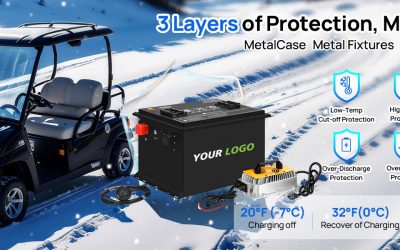
| Below 32°F (0°C) | Cannot charge—BMS disables charging to prevent damage -1-4 |
| 32°F–50°F (0°C–10°C) | Reduced charge acceptance, slower charging |
| 50°F–95°F (10°C–35°C) | Optimal operating range |
| Above 95°F (35°C) | Accelerated aging—every 15°F above 77°F doubles aging rate -1 |
The Heat Risk: High temperatures accelerate the chemical reactions that degrade batteries. For every 15°F (8°C) above 77°F (25°C) , the aging rate approximately doubles -1.
Cold Weather Note: While lithium cannot be charged below freezing, it can be discharged at low temperatures. A quality BMS will protect the battery by preventing charging until it warms up -4-5.
2.4 Storage Conditions
How you store your battery during off-seasons significantly impacts calendar life.
| Storage Condition | Impact |
|---|---|
| 50–80% state of charge | Ideal—minimal stress -1-9 |
| 100% charge | Accelerates aging (5–10% faster capacity loss) -1 |
| 0% charge | Risk of BMS lockout, cell damage -1 |
| Cool location (50–70°F) | Minimal degradation |
| Hot location (90°F+) | Significant capacity loss over months |
Storage Best Practice: For off-season storage, charge to 50–80%, disconnect from the cart, and store in a cool, dry place. Check voltage every 3–6 months and recharge if below 20% -6-9.
2.5 Battery Quality and BMS Sophistication
Not all lithium batteries are created equal. The quality of cells and the sophistication of the Battery Management System (BMS) directly impact lifespan -7.
| Feature | Impact on Longevity |
|---|---|
| Grade A cells | Consistent performance, longer life |
| Active cell balancing | Maintains cell uniformity, extends pack life -1 |
| Temperature monitoring | Prevents charging in unsafe conditions -7 |
| Over-discharge protection | Prevents damage from deep discharges -5 |
The BMS Advantage: A quality BMS continuously monitors individual cell voltages, temperature, and current, making real-time adjustments to keep the battery within safe operating parameters. This electronic guardian is the primary reason modern lithium batteries achieve such impressive lifespans -7.
Part 3: Real-World Lifespan by Usage Pattern
3.1 Recreational User (Weekend Golfer)
| Factor | Typical Value |
|---|---|
| Usage frequency | 1–2 times per week (50–100 rounds/year) |
| Cycles per year | 50–100 |
| Expected lifespan | 15–20+ years -5 |
Analysis: At this usage level, calendar aging becomes the limiting factor rather than cycle life. The battery will likely outlast your ownership of the cart.
3.2 Daily Personal User
| Factor | Typical Value |
|---|---|
| Usage frequency | 5–7 times per week (200–300 uses/year) |
| Cycles per year | 200–300 |
| Expected lifespan | 8–12 years -10 |
Analysis: This is the sweet spot where lithium’s cycle life advantage fully pays off. Even with daily use, a quality battery provides a decade of service.
3.3 Light Commercial (Resort, Course Fleet)
| Factor | Typical Value |
|---|---|
| Usage frequency | Daily, multiple cycles possible (300–500 uses/year) |
| Cycles per year | 300–500 |
| Expected lifespan | 5–8 years -2 |
Analysis: Commercial use accelerates cycling, but lithium still delivers 2–3× the life of lead-acid in the same application. Faster charging also means fewer batteries needed in rotation -2.
3.4 Heavy Commercial (High-Usage Fleet)
| Factor | Typical Value |
|---|---|
| Usage frequency | Daily, deep cycles (500+ uses/year) |
| Cycles per year | 500–800 |
| Expected lifespan | 4–6 years |
Analysis: Even under the most demanding conditions, lithium outperforms lead-acid, which would require annual replacement. The reduced downtime and maintenance costs make lithium the clear choice for fleet operators -2.
Part 4: Comparison to Lead-Acid Lifespan
4.1 Side-by-Side Comparison
| Metric | Lead-Acid | Lithium | Lithium Advantage |
|---|---|---|---|
| Cycle Life (80% DoD) | 300–500 cycles -2 | 2,000–5,000+ cycles -5 | 5–10× longer |
| Calendar Life | 3–5 years -4 | 8–12+ years -10 | 2–3× longer |
| Usable Capacity | 50% of rated -4 | 80–90% of rated -4 | More range per charge |
| Maintenance | Monthly watering, cleaning | None | Zero maintenance |
4.2 The Replacement Factor
Lead-Acid Reality:
-
Replace every 3–5 years
-
2–3 replacements over a 10-year period
-
Cumulative cost: $2,400–$4,500+ -4
Lithium Reality:
-
One battery lasts 8–12+ years
-
Zero replacements over a decade
-
One-time investment: $2,500–$4,500 -10
The Math: While lithium costs 2–3× more upfront, the 10-year total cost of ownership is often 30–40% lower than lead-acid when factoring in replacements and maintenance -2-4.
Part 5: Maximizing Your Lithium Battery’s Lifespan
5.1 Charging Best Practices
| Practice | Why It Matters |
|---|---|
| Use only lithium-specific charger | Proper voltage profile prevents damage -9 |
| Recharge at 20–30% | Avoids stress of deep discharge -9 |
| Partial charges are fine | Lithium has no memory effect -10 |
| Full charge monthly | Allows BMS cell balancing -1 |
| Let battery cool before charging | Reduces heat stress -6 |
5.2 Temperature Management
| Scenario | Best Practice |
|---|---|
| Summer parking | Choose shade, use reflective cover |
| After heavy use | Let battery cool 30 minutes before charging |
| Winter storage | Store indoors if possible, or insulate compartment -9 |
| Charging in cold | Ensure battery temperature >32°F -1 |
5.3 Storage Protocols
Short-term (under 1 month): No action needed -1
Medium-term (1–3 months): Charge to 50–80%, disconnect -9
Long-term (3+ months): Store at 50–80% SOC, check voltage monthly, recharge if below 20% -1-6
5.4 Maintenance Checklist
| Task | Frequency |
|---|---|
| Visual inspection | Monthly |
| Check connections tightness | Quarterly |
| Monitor BMS via app (if available) | Monthly |
| Full charge cycle | Monthly -1 |
| Terminal cleaning (if needed) | Annually |
Part 6: When to Consider Replacement
6.1 Signs Your Lithium Battery May Need Replacement
Lithium batteries typically don’t fail suddenly. Instead, they gradually lose capacity. Consider replacement when:
| Sign | What It Means |
|---|---|
| Range drops below 70% of original | End of useful life -1 |
| Noticeable performance decline | Multiple cells degrading |
| Frequent BMS shutdowns | Internal protection triggering often |
| Physical swelling | Stop using immediately—contact manufacturer -9 |
| Persistent cell imbalance | BMS unable to maintain uniformity |
6.2 The 80% Rule
Manufacturers consider batteries “end of life” when they reach 80% of original capacity -1-3. At this point:
-
A 40-mile range battery now delivers 32 miles
-
Still usable for many applications
-
Replacement timing depends on whether reduced range meets your needs
Part 7: Frequently Asked Questions
7.1 Do lithium batteries really last 10 years?
Yes, quality lithium iron phosphate (LiFePO₄) batteries from reputable manufacturers typically last 8–12 years with proper care -5-10. Some premium models offer design lives up to 15 years for light usage -1.
7.2 How many cycles do lithium golf cart batteries last?
Expect 2,000 to 5,000+ cycles at 80% depth of discharge -5-6. This compares to 300–500 cycles for lead-acid -2.
7.3 What kills lithium batteries prematurely?
The main factors that shorten lithium battery life are:
-
Heat (consistent operation above 95°F) -1
-
Deep discharges (regularly draining below 10%) -9
-
Charging below freezing (causes permanent damage) -4
-
Using wrong charger (overvoltage damages cells) -9
-
Poor storage (100% charge in hot conditions) -1
7.4 Can I leave my lithium golf cart plugged in all the time?
Most quality lithium chargers have automatic shut-off features, making continuous connection safe -9. However, for optimal longevity, it’s best to unplug when fully charged and avoid maintaining 100% charge for extended periods -7.
7.5 Do lithium batteries lose capacity in cold weather?
During discharge, lithium retains 80–90% capacity at freezing temperatures—significantly better than lead-acid -2-5. However, charging below 32°F is prohibited unless the battery has built-in heating -1-4.
7.6 How do I know when my lithium battery is dying?
Look for:
-
Reduced range (your first sign)
-
Voltage dropping faster than usual
-
BMS error codes or frequent shutdowns
-
Inability to reach full charge voltage
7.7 Are expensive lithium brands worth the extra cost?
Premium brands often offer:
-
Higher-grade cells with tighter manufacturing tolerances
-
More sophisticated BMS with active balancing -7
-
Better warranties (5–11 years vs. 2–3 years)
-
Stronger customer support
For heavy users, these features translate to longer actual lifespan and better support when issues arise -8.
7.8 Can I extend my lithium battery’s life beyond 10 years?
With exceptionally light use, optimal charging habits, and ideal storage conditions, some lithium batteries exceed their rated life. However, calendar aging eventually limits maximum lifespan to 12–15 years regardless of cycle count -1.
Part 8: The Bottom Line—Is Lithium Worth It?
8.1 Value Calculation
| Factor | Lithium | Lead-Acid |
|---|---|---|
| Upfront cost | Higher ($2,500–$4,500) | Lower ($800–$1,500) |
| Lifespan | 8–12 years | 3–5 years |
| Replacements over 10 years | 0 | 2–3 |
| 10-year total cost | $2,500–$4,500 | $3,000–$5,500+ -4 |
| Maintenance time | 0 hours/year | 10–20 hours/year |
8.2 Who Benefits Most from Lithium?
| User Type | Lithium Value Proposition |
|---|---|
| Frequent user (daily/weekly) | Excellent—long life justifies cost -10 |
| Commercial fleet | Excellent—fast charging, minimal downtime -2 |
| Hilly terrain | Excellent—consistent power throughout discharge -5 |
| Occasional user | Good—will last decades, but may not fully utilize cycle life |
| Tight budget | Consider—upfront cost may be prohibitive |
8.3 The Verdict
For the majority of golf cart owners—especially those who use their carts regularly—lithium batteries deliver exceptional value despite higher upfront costs. The combination of:
-
8–12+ year lifespan -10
-
Zero maintenance -9
-
Consistent performance from full to empty -5
-
2–4 hour charging vs. 8–10 hours -8
…creates a compelling package that pays for itself over time while providing a superior ownership experience.
Conclusion: A Decade of Reliable Power
Lithium golf cart batteries represent a true advancement in energy storage technology. With proper care, your investment will deliver:
✓ A decade or more of reliable service
✓ Thousands of trouble-free cycles
✓ Consistent performance every time you drive
✓ Zero maintenance beyond occasional inspections
The key to achieving these impressive lifespans lies in understanding and respecting a few simple principles:
-
Charge smart—partial daily charges, full monthly charges -1
-
Avoid extremes—heat is your battery’s enemy -1
-
Respect temperature limits—never charge below freezing -4
-
Store properly—50–80% charge in cool conditions -9
-
Use the right equipment—lithium-specific charger only -10
By following these guidelines, you’ll maximize every dollar of your investment and enjoy years of worry-free golf cart operation. The lithium advantage isn’t just about longer life—it’s about a fundamentally better way to power your cart, from the first hole to the last, year after year.
Have questions about your specific lithium battery? Contact our team for personalized guidance on maximizing your battery’s lifespan.