What Are Low-Speed Vehicles (LSVs) and Why Are They So Popular in 2026?
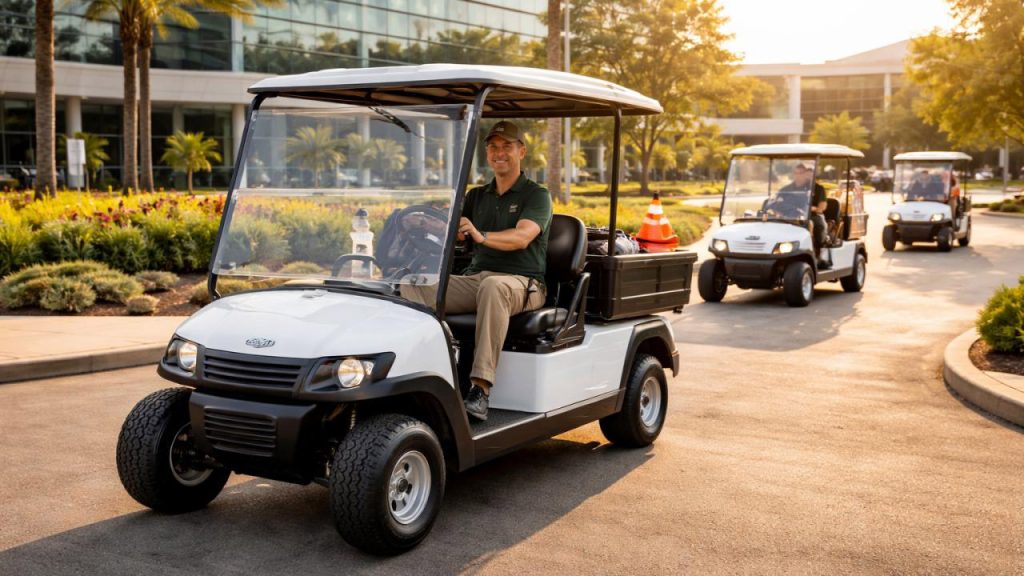
Low-speed vehicles (LSVs) are becoming an increasingly familiar sight in residential communities, beach towns, retirement neighborhoods, resorts, and other areas across the United States. Often resembling compact golf carts, these small vehicles offer a convenient way to travel short distances without using a traditional passenger car.
However, an LSV is more than an ordinary golf cart with a larger motor. It belongs to a specific vehicle category defined by federal safety regulations. Depending on its design and certification, an LSV can be legally registered for certain public-road applications, making it useful for neighborhood transportation, local errands, hospitality operations, and commercial applications.
In 2026, interest in LSVs continues to grow as consumers look for practical alternatives to conventional vehicles for short trips. Their compact dimensions, electric powertrains, relatively simple operation, and lower-speed design make them attractive in communities where daily destinations are close together.
But what exactly qualifies as a low-speed vehicle? How is it different from a golf cart? Where can it legally operate? And why are more consumers and businesses considering LSVs?
This guide explains everything buyers, golf cart dealers, vehicle manufacturers, and fleet operators should know about low-speed vehicles in 2026.
Quick Answer: What Is a Low-Speed Vehicle?
A Low-Speed Vehicle (LSV) is a federally defined four-wheeled motor vehicle designed to travel at speeds greater than 20 mph but no more than 25 mph on a paved, level surface. Under the federal definition, its gross vehicle weight rating (GVWR) must be less than 3,000 pounds.
In the United States, LSVs must comply with Federal Motor Vehicle Safety Standard (FMVSS) No. 500, which establishes minimum safety equipment requirements.
Common LSV characteristics include:
- A maximum attainable speed of 25 mph.
- Four wheels.
- A GVWR below 3,000 pounds.
- Headlights, taillights, and turn signals.
- Stop lamps and reflex reflectors.
- Rearview mirrors.
- A parking brake.
- A compliant windshield.
- Seat belts.
- A vehicle identification number (VIN).
- A compliant rear visibility system.
LSVs are commonly associated with neighborhood electric vehicles (NEVs), although the terms are not always interchangeable in every regulatory or commercial context.
Importantly, federal LSV classification does not automatically grant unrestricted access to public roads. State and local laws determine where these vehicles may operate, and registration, licensing, and insurance requirements vary by jurisdiction.
1. What Does LSV Stand For?
LSV stands for Low-Speed Vehicle.
The category was established to accommodate small motor vehicles designed for short-distance transportation in controlled, lower-speed environments.
Many LSVs look similar to golf carts, but they are designed and certified to meet specific federal safety requirements. Unlike conventional golf carts, which are primarily designed for golf courses and private-property transportation, LSVs are manufactured for certain public-road applications.
The National Highway Traffic Safety Administration (NHTSA) defines the federal LSV category through vehicle specifications and FMVSS No. 500.
Federal LSV Requirements
The main federal classification requirements include:
The vehicle must be designed and certified as an LSV by the manufacturer. Simply adding lights, mirrors, or seat belts to an ordinary golf cart does not automatically make it a federally compliant LSV.
The federal requirements are specified in 49 CFR § 571.500 – Standard No. 500.
2. What Is the Difference Between an LSV, a Golf Cart, and an NEV?
One of the most common sources of confusion is the difference between low-speed vehicles, neighborhood electric vehicles, and conventional golf carts.
Although these vehicles may look similar, they have different purposes and regulatory requirements.


Low-Speed Vehicle (LSV)
An LSV is a federally defined motor vehicle capable of traveling above 20 mph but not exceeding 25 mph, with a GVWR below 3,000 pounds. It must meet applicable federal safety requirements and is designed for certain public-road applications.
Neighborhood Electric Vehicle (NEV)
NEV stands for Neighborhood Electric Vehicle. The term is commonly used to describe electric vehicles designed for short-distance transportation in residential neighborhoods and other low-speed environments. Many NEVs meet the federal LSV definition and are certified under FMVSS No. 500. However, the term NEV is also used commercially, so buyers should verify the actual vehicle classification and manufacturer certification rather than relying on the product name alone.
Traditional Golf Cart
A traditional golf cart is primarily designed for transporting golfers and equipment around golf courses. Most conventional golf carts have a top speed below 20 mph and are not manufactured or certified as LSVs. They generally do not include all the federally required LSV equipment. Some states and local governments allow golf carts to operate on designated public roads under separate golf cart laws. That permission does not automatically turn the vehicle into an LSV.
Personal Transportation Vehicle (PTV)
PTV is another commercial term used for recreational or neighborhood-oriented vehicles. Some PTVs have maximum speeds below the federal LSV threshold and do not carry the equipment or certification required for LSV status. The distinction matters because a vehicle marketed as a PTV or street-ready golf cart is not necessarily an LSV.
LSV vs. Golf Cart vs. NEV vs. PTV
The U.S. International Trade Commission distinguishes golf carts, LSVs, PTVs, and light utility vehicles as separate categories within the broader low-speed personal transportation vehicle market.
The most important buying rule: Check the manufacturer’s certification label, VIN, and certificate of origin. Do not assume that a vehicle is street legal simply because it has headlights, turn signals, mirrors, and seat belts.
3. Why Are Low-Speed Vehicles So Popular in 2026?
The growing interest in LSVs reflects changes in how people use personal transportation. Many everyday trips do not require a full-size car. Traveling to a nearby grocery store, community clubhouse, swimming pool, restaurant, or neighbor’s home may involve only a short distance. For these trips, a compact electric vehicle can be a practical alternative.

Source: clubcar.com
3.1 Convenient for Short-Distance Transportation
One of the main advantages of an LSV is convenience. Traditional passenger cars can be unnecessarily large for short neighborhood journeys. LSVs offer a smaller transportation option that is easier to maneuver in many residential environments.
Typical short-distance applications include:
- Traveling within residential communities.
- Visiting nearby shops and restaurants.
- Transporting passengers around resorts.
- Moving between buildings on private properties.
- Traveling around retirement communities.
- Accessing local recreational facilities.
Their compact size can also make parking and maneuvering easier in areas with limited space.
3.2 Lower Operating Costs
Electric LSVs do not require gasoline or diesel. Their operating costs are therefore different from those of conventional internal combustion vehicles. The main ongoing expenses typically include:
- Electricity for charging.
- Battery replacement over the vehicle’s service life.
- Tire replacement.
- Brake and suspension maintenance.
- Routine inspections.
- Insurance and registration where required.
Electric powertrains also have fewer moving components than conventional gasoline engines, which can simplify some maintenance tasks. However, the actual ownership cost depends on the vehicle, battery type, electricity prices, local registration rules, and frequency of use.
3.3 Environmentally Conscious Transportation
Electric LSVs produce no tailpipe emissions during operation. For residential communities, resorts, and commercial properties, this can be an attractive feature compared with gasoline-powered vehicles. They can also help reduce local noise and eliminate the need to store gasoline for vehicle operation.
However, an electric vehicle is not completely emissions-free over its entire life cycle. Electricity generation, battery manufacturing, transportation, and end-of-life recycling all contribute to its environmental footprint.
3.4 Compact Size and Easy Maneuverability
LSVs are smaller than conventional passenger cars, making them useful in locations where roads, parking areas, and internal pathways are relatively narrow. Their compact design is particularly attractive for:
- Beach communities.
- Retirement neighborhoods.
- Resorts and hotels.
- Planned residential developments.
- Private campuses.
- Gated communities.
For property managers, smaller vehicles can also be useful for moving personnel and visitors around large sites.
3.5 A Comfortable Alternative for Neighborhood Travel
Modern LSVs are available in different seating configurations and equipment levels. Depending on the manufacturer, options may include:
- Two-, four-, and six-passenger seating.
- Enclosed cabins.
- Weather protection.
- Windshields and wipers.
- Storage compartments.
- Digital displays.
- USB charging ports.
- Rear cargo beds.
- Upgraded seating and suspension.
These options allow buyers to select vehicles based on passenger capacity, comfort, and intended use.
3.6 Growing Acceptance in Residential Communities
Some residential communities have established local rules that allow LSVs on designated roads. This makes them attractive for residents who want convenient transportation without driving a conventional car for every short trip.
AARP published a June 2026 report describing how street-legal low-speed vehicles are being adopted in some communities, including beach towns and neighborhoods where residents use them for everyday local travel.
The growing appeal is not limited to individual owners. Hotels, resorts, property developers, and commercial operators are also evaluating compact electric vehicles for internal transportation.
4. Where Can Low-Speed Vehicles Be Driven?
The ability to operate on public roads is one of the defining characteristics of an LSV, but the rules are not identical across the United States. Federal regulations establish what qualifies as an LSV and the safety equipment it must have. State and local governments determine where properly classified vehicles may operate.
Federal Road Access Framework
The federal LSV category is designed around vehicles with a maximum speed of 25 mph. Federal rules do not mean that every LSV can operate on every road with a speed limit of 35 mph or less. The applicable state and local laws must be checked. For example, certain jurisdictions allow LSV operation on designated roads with speed limits up to 35 mph, while others impose different limits, restrictions, or additional conditions.
Examples of State Regulations
The following examples illustrate differences between jurisdictions; they are not a complete nationwide legal guide.
Sources: South Carolina Code of Laws, Nevada DMV, and Massachusetts RMV.
What Should LSV Owners Check Before Driving?
Before using an LSV on public roads, confirm:
- The vehicle has the correct manufacturer certification and VIN.
- The vehicle is properly titled and registered.
- Required insurance is in place.
- The driver meets the applicable licensing requirements.
- The road is approved for LSV operation.
- Any local restrictions on hours, routes, or operating areas are followed.
- All required safety equipment is functioning correctly.
Important: Always check current state DMV requirements and local ordinances before driving. Road access rules can change, and a vehicle permitted in one community may be restricted in another.
5. What Safety Features Do LSVs Need?
Safety equipment is one of the most important differences between a certified LSV and a traditional golf cart. Because LSVs are intended for certain public-road applications, federal regulations require specific equipment designed to improve visibility and basic occupant protection.

Source: oyerinsurance.com
Headlights and Taillights
Headlights allow the vehicle to illuminate the road ahead and improve visibility to other drivers. Taillights and stop lamps help communicate the vehicle’s position and braking actions.
Turn Signals
Front and rear turn signals allow drivers to communicate their intended direction when changing direction or entering traffic.
Rearview Mirrors
Mirrors help the driver monitor surrounding traffic. Depending on the vehicle configuration, exterior mirrors and an interior mirror may be used to meet the applicable requirements.
Windshield
LSVs must use a windshield that meets the applicable federal glazing requirements. A windshield should not be treated as an ordinary decorative accessory. Its material and compliance are important.
Seat Belts
Seat belts are required for LSVs. Drivers and passengers should use them properly whenever the vehicle is in operation.
Parking Brake
A parking brake helps prevent the vehicle from moving when parked.
Rear Visibility System
The applicable federal standard also includes rear visibility requirements. Buyers should confirm that the vehicle meets the relevant requirements rather than assuming a basic rearview mirror is sufficient.
VIN and Certification Label
A certified LSV must have the appropriate vehicle identification and manufacturer certification information. This is important for registration, ownership records, insurance, and verifying the vehicle’s regulatory classification.
6. LSVs vs. Traditional Cars: What Are the Main Advantages and Limitations?
LSVs are not designed to replace conventional passenger vehicles in every situation. Their main advantage is providing a smaller transportation option for suitable low-speed environments.
Limitations Buyers Should Understand
An LSV’s lower speed is both a defining characteristic and a limitation. It is generally unsuitable for:
- Interstate highways.
- High-speed expressways.
- Long-distance highway travel.
- Roads where the speed of surrounding traffic creates an unsafe operating environment.
- Areas where local regulations prohibit LSV operation.
NHTSA has also emphasized that LSVs are not subject to the full range of occupant-protection standards applicable to conventional passenger cars. Their basic federal equipment requirements should not be mistaken for equivalent crash protection.
7. What Types of Low-Speed Vehicles Are Available?
LSVs are available in several configurations to meet different transportation requirements.


Two-Passenger LSVs
Two-passenger models are compact and convenient for individual owners, couples, and short neighborhood trips. They are often suitable for:
- Residential communities.
- Beach towns.
- Short-distance errands.
- Private properties.
Four-Passenger LSVs
Four-passenger models provide more seating capacity and are popular among families, communities, and hospitality businesses. They offer a practical balance between passenger capacity and vehicle dimensions.
Six-Passenger LSVs
Six-passenger vehicles are designed for group transportation. Common applications include:
- Resorts.
- Hotels.
- Large residential developments.
- Tourist destinations.
- Private campuses.
Utility LSVs
Utility-oriented models may include rear cargo beds, storage compartments, and other equipment designed for light-duty transportation. They can be useful for:
- Landscaping teams.
- Maintenance departments.
- Property management.
- Commercial facilities.
- Campus operations.
The appropriate vehicle classification and legal use still depend on the manufacturer’s certification and the vehicle’s intended design.
8. How Do Batteries Power Modern Electric LSVs?
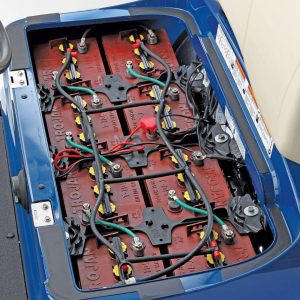
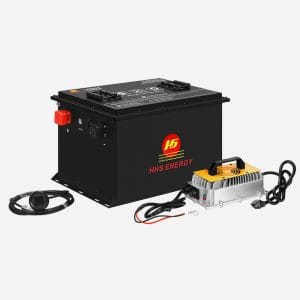
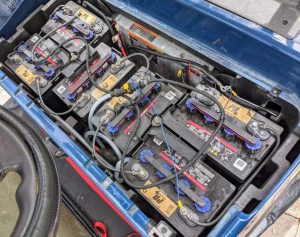
The battery is one of the most important components of an electric low-speed vehicle. It determines how much energy the vehicle can store, how far it can travel between charges, and how consistently it can deliver power to the motor. Two common battery technologies are lead-acid and lithium-ion.
Lead-Acid Batteries
Lead-acid batteries have been widely used in electric golf carts and other small electric vehicles. Their main advantages include:
- Lower initial purchase cost.
- Established supply chains.
- Familiar replacement procedures.
- Broad availability.
However, traditional flooded lead-acid batteries require regular maintenance and are relatively heavy. Their usable capacity and service life can also be affected by repeated deep discharging, incorrect charging, and prolonged storage in a discharged condition.
Lithium-Ion Batteries
Lithium-ion batteries are becoming increasingly important in modern electric LSVs and neighborhood vehicles. LiFePO₄ is a popular chemistry for deep-cycle applications because of its cycle-life potential and thermal stability. Potential advantages include:
- Lower battery weight.
- Higher usable energy relative to rated capacity.
- More consistent voltage during discharge.
- Faster charging potential with compatible equipment.
- Reduced routine maintenance.
- Integrated BMS protection and monitoring.
The actual performance depends on cell quality, pack design, BMS configuration, charger compatibility, and operating conditions.
Lead-Acid vs. Lithium Batteries for LSVs
Why Battery Capacity Matters
Battery capacity is usually expressed in amp-hours (Ah), but voltage must also be considered. The nominal energy of a battery can be calculated using:
Energy (Wh) = Voltage (V) × Capacity (Ah)
For example, a 51.2V, 105Ah lithium battery provides: 51.2 × 105 = 5,376 Wh, which is approximately 5.38 kWh of nominal energy.
The amount of energy actually available to the vehicle will depend on the manufacturer’s operating limits, temperature, discharge rate, and system efficiency.
When choosing a battery for an LSV, buyers should consider:
- Vehicle voltage.
- Motor and controller power requirements.
- Daily driving distance.
- Passenger and cargo load.
- Charging frequency.
- Operating temperature.
- Available battery installation space.
- Required continuous and peak discharge current.
A battery should be selected for the complete electrical system rather than based on its Ah rating alone.
Why BMS Protection Is Important
Modern lithium battery packs generally include a battery management system. A properly designed BMS may provide:
- Cell overvoltage protection.
- Cell undervoltage protection.
- Overcurrent protection.
- Short-circuit protection.
- Temperature monitoring.
- Low-temperature charging protection.
- Cell balancing.
- Battery status monitoring.
Some advanced battery systems also support Bluetooth monitoring and communication with compatible vehicle controllers or chargers. For LSV manufacturers and fleet operators, battery selection should account for the actual motor controller requirements and expected vehicle workload.
9. What Should You Consider Before Buying an LSV?
Buying an LSV involves more than selecting the vehicle with the most attractive appearance. The following factors can help buyers make a more informed decision.
Intended Driving Environment
Think about where the vehicle will be used most often. A vehicle designed for residential roads may not be suitable for rough terrain, steep hills, or heavy-duty commercial work.
Passenger Capacity
Consider the number of people who will regularly travel in the vehicle. A two-passenger vehicle may be adequate for an individual owner, while resorts and communities may need four- or six-passenger models.
Battery Capacity and Driving Range
Estimate the typical daily distance and choose a battery system with sufficient usable energy. Remember that actual range is affected by speed, terrain, temperature, vehicle weight, and driving habits.
Charging Requirements
Check whether the vehicle can be charged using the available electrical infrastructure. For fleet operators, charging schedules and the number of vehicles that need to be charged simultaneously are especially important.
Safety Certification
Verify that the vehicle is actually certified as an LSV if public-road LSV operation is required. Check the manufacturer’s certification label, VIN, certificate of origin, and supporting documentation.
Registration and Insurance
Understand the applicable state and local requirements before purchasing. A vehicle’s legal classification and registration status can influence where it may be driven.
Warranty and After-Sales Support
Review the manufacturer’s warranty, battery coverage, replacement procedures, and availability of spare parts. For commercial buyers, technical support and service response times can be particularly important.
10. Why Are LSVs Attractive to Businesses and Commercial Operators?
LSVs are not only consumer vehicles. Their compact size and electric powertrains make them useful for a variety of commercial environments.

Source: linkedin.com
Hotels and Resorts
Hotels and resorts often operate across large properties with multiple buildings and guest facilities. LSVs can transport guests, employees, luggage, and light equipment over suitable internal roads.
Golf Courses and Country Clubs
Golf courses already have established electric cart operations. Certified LSVs can provide an additional transportation option where local regulations permit their use beyond golf course grounds.
Residential Communities
Property management teams can use LSVs for maintenance, security patrols, and transportation between community facilities.
Universities and Private Campuses
Large campuses may use electric vehicles for staff transportation, light logistics, and maintenance operations.
Commercial and Industrial Properties
Some facilities use compact electric vehicles to move personnel and equipment across large sites. However, buyers should distinguish road-certified LSVs from off-highway utility vehicles. A vehicle’s legal classification depends on its certification and intended use.
11. The Future of Low-Speed Vehicles in the United States
The LSV market is evolving as consumers and businesses seek alternatives for short-distance transportation. Several trends are shaping the market in 2026.
Greater Demand for Electric Neighborhood Transportation
Residential communities and vacation destinations are increasingly considering compact electric vehicles for local transportation. AARP’s 2026 reporting highlights the growing interest in street-legal low-speed vehicles among residents of certain communities, particularly where short local trips are common.
More Advanced Battery Technology
Battery technology continues to improve, with lithium battery systems offering greater flexibility in capacity, monitoring, charging, and vehicle integration. For manufacturers, battery weight, usable energy, thermal protection, and charging compatibility are important design considerations.
More Connected Vehicle Features
Modern LSVs increasingly offer digital displays, battery monitoring, Bluetooth connectivity, and other electronic features. These technologies can help improve user experience and support fleet management.
More Vehicle Configurations
The market includes more than traditional golf cart-style vehicles. Manufacturers offer passenger vehicles, utility configurations, enclosed models, and different seating arrangements for residential and commercial customers.
Greater Importance of Regulatory Compliance
As LSVs become more visible on public roads, vehicle certification and local operating rules remain critical. Manufacturers and dealers need to provide accurate documentation, while consumers must understand the difference between federally certified LSVs and ordinary golf carts.
Frequently Asked Questions About Low-Speed Vehicles
Conclusion: Are Low-Speed Vehicles Worth Considering in 2026?
Low-speed vehicles have developed into a practical transportation category for people and businesses that need convenient short-distance mobility.
Their compact size, electric powertrain options, lower operating speeds, and ability to serve certain public-road applications make them attractive in residential communities, resorts, beach towns, and commercial environments.
However, LSVs should not be confused with ordinary golf carts. Federal certification, safety equipment, vehicle identification, registration, and local road-access rules all play important roles in determining whether a vehicle can legally operate on public roads.
Battery technology is another important part of the LSV market. As more manufacturers adopt lithium battery systems, factors such as usable capacity, charging speed, BMS protection, weight, and system compatibility are becoming increasingly important.
For consumers, the best LSV is one that fits their transportation needs and local regulations. For manufacturers, dealers, and distributors, the opportunity lies in developing reliable vehicles with appropriate safety equipment, well-matched battery systems, and application-specific configurations.
Powering the future of low-speed vehicles.
HHS Energy provides custom LiFePO₄ battery solutions for LSVs, NEVs, golf carts, and utility vehicles. We help OEMs, dealers, and fleet operators choose the right voltage, capacity, BMS, and charger for their platform.
HHS Energy — Lithium Battery Solutions for Golf Carts & Electric Vehicles
© 2026 HHS Energy | Smart Battery Technology