Understanding the Lifespan of Golf Cart Batteries: How Long Do They Really Last?
If you operate, sell, or manage electric golf carts, one question comes up again and again: How long do golf cart batteries last?
The answer depends on much more than the battery’s chemistry. Battery lifespan is influenced by charging habits, depth of discharge, operating temperature, battery quality, maintenance, load, and how frequently the golf cart is used.
Traditional lead-acid batteries and modern lithium batteries can have very different service-life characteristics. Understanding these differences can help golf cart owners choose the right battery and help dealers, distributors, fleet operators, and OEM customers make better purchasing decisions.
In this guide, we’ll explain the expected lifespan of golf cart batteries, compare lead-acid and lithium technologies, identify the factors that shorten battery life, and provide practical ways to maximize battery performance.
How Long Do Golf Cart Batteries Last?
There is no single lifespan that applies to every golf cart battery. As a general guideline, traditional lead-acid golf cart batteries often last around 2–5 years, depending heavily on maintenance and usage. Properly managed lithium batteries can provide a significantly longer service life, with many quality LiFePO₄ systems designed for several thousand charge cycles.
However, years alone are not the best way to measure battery life. For batteries used frequently, cycle life provides a more useful technical measurement. A cycle represents the equivalent of using a certain amount of the battery’s available capacity and subsequently recharging it. One complete 100% discharge and recharge is commonly treated as one full cycle, although real-world use usually consists of partial cycles.
For example, using 50% of a battery’s capacity twice is approximately equivalent to one full cycle.
Golf Cart Battery Lifespan by Battery Type
These figures are general industry ranges rather than guarantees. Actual service life depends on the battery model, cell quality, BMS design, operating conditions, charging practices, and duty cycle.
Lead-Acid vs. Lithium: Detailed Comparison
How Long Do Lead-Acid Golf Cart Batteries Last?
Lead-acid batteries have been used in golf carts for decades and remain common because of their relatively low initial purchase cost and established supply chain. A properly maintained lead-acid golf cart battery bank may last approximately 2–5 years.
Several factors can significantly affect their lifespan:
- Water Maintenance: Flooded batteries require regular electrolyte-level checks.
- Sulfation: Leaving at low state of charge can cause sulfation.
- Deep Discharge: Repeated deep discharging shortens life.
- Heat: High temperatures accelerate aging.
How Long Do Lithium Golf Cart Batteries Last?
Lithium golf cart batteries, particularly LiFePO₄, can offer a substantially longer cycle life than traditional lead-acid batteries. Depending on the specific cell chemistry, battery design, operating conditions, and manufacturer’s specifications, quality LiFePO₄ batteries can be engineered for thousands of cycles.
Actual lifespan depends on:
- Cell quality
- Depth of discharge
- Charge and discharge current
- Temperature
- BMS settings and charging practices
- Storage conditions and mechanical design
- Manufacturing quality
A high-quality lithium battery used under favorable conditions can potentially remain in service for many years. For a fleet operator, this can be an important advantage because battery replacement may occur less frequently.
What Is Cycle Life & Why Depth of Discharge Matters
Cycle Life is one of the most important specifications. Suppose a battery is rated for 4,000 cycles – this does not necessarily mean it will operate at 100% capacity after exactly 4,000 cycles. Manufacturers define cycle life according to a particular test methodology and an end-of-life capacity threshold. When evaluating suppliers, ask about the rated cycle life, depth of discharge (DoD), charge/discharge rate, temperature, and end-of-life threshold.
Depth of Discharge (DoD) refers to how much of a battery’s capacity has been used. Repeated deep discharge generally places more stress on a battery than shallow cycling. Lithium batteries are often more tolerant of deeper cycling than lead-acid, but that does not mean operating at maximum DoD every time is optimal for maximizing lifespan.
A BMS can help prevent excessive discharge by disconnecting the battery when voltage reaches the programmed protection threshold.
Does a Larger Golf Cart Battery Last Longer?
Not necessarily. A larger battery does not automatically have a longer lifespan. However, a larger-capacity battery may experience a shallower depth of discharge during the same driving cycle. For example, if two batteries (48V 100Ah vs 48V 150Ah) power the same cart consuming 3kWh per trip, the larger battery uses a smaller percentage of its total capacity. Lower effective DoD can reduce cycling stress and potentially contribute to longer battery life. This is one reason fleet operators sometimes select a larger battery than the minimum required capacity.
How Charging Habits Affect Golf Cart Battery Life
- Avoid Using an Incompatible Charger: The charger must match the battery chemistry and voltage.
- Avoid Repeated Overcharging: A properly designed BMS and charger can prevent overcharging, but charging systems should still be correctly configured.
- Don’t Regularly Run the Battery to Empty: Although modern lithium batteries can support deep discharge, repeatedly using the battery until the BMS shuts it down is not ideal if the objective is maximum service life.
For everyday operation, moderate cycling can be beneficial.
How Temperature Affects Golf Cart Battery Lifespan
High Temperature: Heat can accelerate battery degradation. Golf carts operating in hot climates may experience additional thermal stress. A good battery design should include appropriate temperature monitoring and protection.
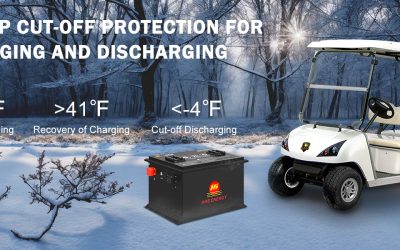
Low Temperature: Cold weather can temporarily reduce battery performance and available capacity. For lithium batteries, charging at temperatures below the manufacturer’s specified minimum can be particularly problematic. Some advanced lithium golf cart batteries therefore include temperature sensors, low-temperature charging protection, heating systems, and smart BMS controls.
Signs Your Golf Cart Battery Is Reaching the End of Its Life
- Reduced Driving Range: If the cart previously traveled significantly farther on a full charge but now requires charging much more frequently, battery capacity may have declined.
- Slow Charging: A battery that takes substantially longer than normal to charge may require inspection.
- Voltage Drops Under Load: A weak battery may show a significant voltage drop when accelerating or climbing a hill.
- Reduced Acceleration: If the cart struggles to accelerate even when fully charged, the battery system may no longer be delivering sufficient current.
- Battery Swelling or Physical Damage: Physical deformation, swelling, damaged cables, leaking electrolyte, unusual odor, or excessive heating should be treated as warning signs. Stop using a battery showing serious physical abnormalities and have it evaluated by a qualified professional.
How to Extend the Life of a Lithium Golf Cart Battery
- Use the Correct Charger – compatible with chemistry, voltage, and manufacturer’s requirements.
- Avoid Extreme Temperatures – keep the battery within its specified operating and storage temperature range.
- Avoid Unnecessary Deep Discharge – don’t routinely operate until BMS disconnects.
- Monitor Battery Condition – check SOC, voltage, temperature, fault status via Bluetooth or other monitoring.
- Keep the Battery Dry and Secure – properly mounted and protected from moisture, vibration, and impact.
- Follow Storage Instructions – if not used for weeks or months, follow recommended storage SOC and temperature.
How to Extend the Life of Lead-Acid Golf Cart Batteries
- Check Water Levels – regularly inspect electrolyte levels for flooded batteries.
- Use Distilled Water – do not use ordinary tap water unless the manufacturer permits.
- Clean Battery Terminals – corrosion increases resistance.
- Keep Batteries Charged – avoid leaving them deeply discharged for long periods.
- Avoid Excessive Heat – keep battery compartment ventilated and protected.
- Follow the Charging Schedule – use a charger designed for the battery bank’s voltage and chemistry.
Golf Cart Battery Lifespan: Lithium vs. Lead-Acid
Total Cost of Ownership = Purchase Cost + Charging Cost + Maintenance + Replacement Cost + Downtime. For commercial fleets, this calculation can produce a very different result from simply comparing battery purchase prices.
What Should Golf Cart Battery Dealers Look for?
Dealers and distributors should look beyond a manufacturer’s advertised cycle-life number. When evaluating a golf cart battery supplier, ask for:
- Cell Information: cell manufacturer, chemistry, grade, capacity, consistency.
- Battery Specifications: nominal voltage, capacity, continuous/peak discharge current, charging current, operating/storage temperature.
- BMS Specifications: overcharge/over-discharge/overcurrent/short-circuit/temperature protection, low-temperature charging protection.
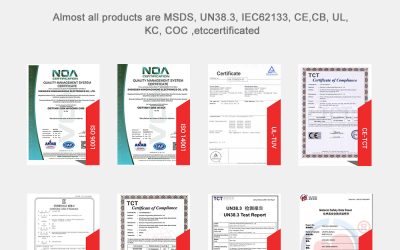
- Testing: capacity, cycle, high/low-temperature, overcharge/discharge, vibration, safety testing on complete battery packs.
For B2B customers, supplier quality control can have a major effect on the real-world lifespan of the batteries they sell.
Why Battery Manufacturing Quality Matters
Two batteries with identical specifications on paper can have very different real-world performance. Actual performance can differ because of cell quality, cell matching, welding quality, BMS design, thermal management, enclosure construction, production consistency, quality control, and testing procedures.
This is particularly important for OEM and ODM projects. A reliable battery manufacturer should have a controlled production process and comprehensive testing procedures to ensure consistency from pack to pack.
For custom golf cart batteries, a manufacturer can optimize the battery around voltage, capacity, maximum current, daily energy consumption, battery compartment, vehicle weight, motor power, controller, charger, operating temperature, and expected cycle life.
Frequently Asked Questions About Golf Cart Battery Lifespan
Final Thoughts: How to Get the Most From Your Golf Cart Battery
Understanding golf cart battery lifespan requires looking beyond the number of years printed on a product specification sheet.
For lead-acid batteries, proper watering, charging, cleaning, and avoiding prolonged deep discharge are essential. For lithium batteries, battery quality, BMS protection, temperature management, charging practices, and depth of discharge have a major influence on long-term performance.
For businesses, the most important question is often not simply “How long will this battery last?” but “How much reliable energy can this battery deliver over its useful life, and what will that energy actually cost?”
A well-designed LiFePO₄ golf cart battery can offer long cycle life, lower maintenance, stable voltage, reduced weight, and high usable energy. When properly matched to the vehicle and operating environment, these advantages can make lithium an attractive long-term solution for golf carts and commercial fleets.
For golf cart manufacturers, dealers, distributors, and fleet operators, selecting a battery manufacturer with strong cell quality control, BMS engineering, testing capabilities, and OEM/ODM experience can be just as important as selecting the battery chemistry itself.
Maximize your golf cart battery lifespan with the right solution.
HHS Energy provides custom lithium battery packs engineered for long cycle life and reliable performance. We help you choose the right chemistry, capacity, and BMS to match your fleet’s duty cycle and budget.
HHS Energy — Lithium Battery Solutions for Golf Carts & Electric Vehicles
© 2025 HHS Energy | Smart Battery Technology