Golf cart batteries are manufactured all over the world, but the majority come from a few key regions with strong battery industries. Understanding where golf cart batteries are made helps you evaluate quality, pricing, and technology—especially when choosing between traditional lead-acid and modern lithium options.
🌍 Global Overview of Golf Cart Battery Manufacturing
Today, golf cart batteries are primarily produced in:
🇨🇳 China – largest lithium battery manufacturing hub
🇺🇸 United States – strong in lead-acid and premium lithium brands
🇰🇷 South Korea – advanced lithium cell technology
🇯🇵 Japan – high-quality battery engineering
Each region plays a different role in the supply chain.
🇨🇳 China: The World’s Lithium Battery Factory
China dominates the production of LiFePO₄ lithium golf cart batteries, especially for 36V, 48V, and 72V systems.
Many global brands rely on Chinese manufacturing for cost efficiency and scalability.
🇺🇸 United States: Brand, Engineering & Lead-Acid Production
The U.S. remains a major player—especially in brand development, system design, and lead-acid battery manufacturing.
Key Companies
Trojan Battery Company
East Penn Manufacturing
These companies are known for:
Deep-cycle lead-acid batteries
Long-standing reliability
Domestic manufacturing (in some cases)
Lithium Brands Based in the U.S.
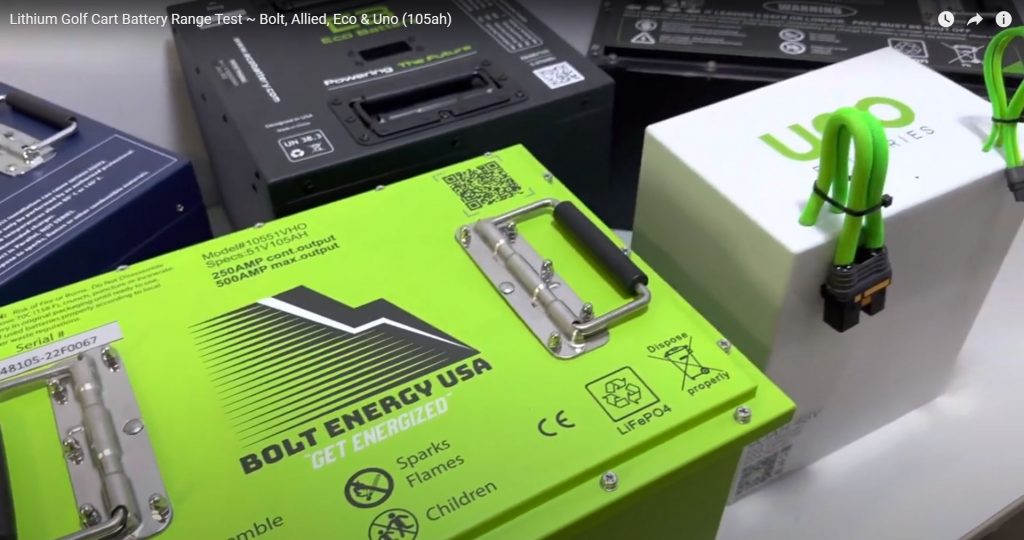
Many well-known lithium golf cart battery brands are U.S.-based, including:
ECO Battery
Bolt Energy USA
ROYPOW
Allied Lithium
Important Note:
Most of these brands:
Design and market products in the U.S.
Source lithium cells from Asia
Use OEM factories (often in China) for production
🇰🇷 South Korea & 🇯🇵 Japan: Advanced Cell Technology
Countries like South Korea and Japan are leaders in high-end lithium battery cell technology.
Examples
LG Energy Solution
Samsung SDI
Panasonic
While these companies don’t focus specifically on golf cart batteries, their cells are sometimes used in premium lithium battery systems.
🔋 How Golf Cart Batteries Are Actually Made
Most golf cart batteries go through a three-stage global supply chain:
1. Raw Materials & Components
Lithium, lead, nickel, and other materials are processed
Mostly sourced globally, often refined in China
2. Battery Cell Manufacturing
Lithium cells are produced by companies like CATL and EVE Energy
Lead-acid plates are produced by companies like Trojan
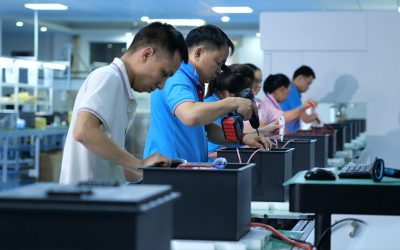
3. Battery Pack Assembly
Cells are assembled into full battery packs
Battery Management Systems (BMS) are added
Final testing and certification are completed
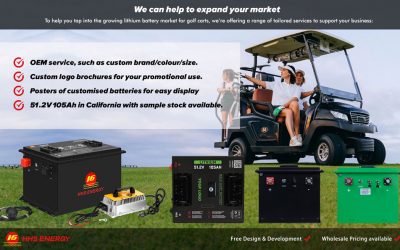
This step is often done by specialized factories such as HHS Energy or OEM manufacturers.
🧠 Lead-Acid vs Lithium: Manufacturing Differences
Lead-Acid Batteries
More commonly produced in the U.S. and globally
Simpler technology
Lower cost
Shorter lifespan
Lithium (LiFePO₄) Batteries
Mostly produced in China
Require advanced electronics (BMS)
Higher upfront cost
Longer lifespan and better performance
⚖️ Does Country of Origin Matter?
Yes—but not as much as you might think.
What Matters More:
✔ Cell quality ✔ BMS design ✔ Engineering and testing ✔ Certifications (UL, CE, UN38.3) ✔ Brand support and warranty
A well-designed battery from a reputable brand—regardless of where it’s assembled—can outperform a poorly designed one made anywhere.
🚗 Real-World Example
A typical 48V lithium golf cart battery might involve:
Cells from CATL
Assembly by a Chinese manufacturer like HHS Energy
Sold under a U.S. brand such as ECO Battery
This global collaboration is standard across the industry.
🧾 Final Thoughts
Golf cart batteries are truly global products, combining materials, technology, and manufacturing expertise from multiple regions.
China leads in lithium battery production
The U.S. leads in branding and lead-acid manufacturing
South Korea & Japan contribute advanced cell technology
Whether you’re buying a traditional lead-acid battery or upgrading to lithium, understanding where batteries are made helps you make a more informed decision—but always focus on quality, design, and reliability first.