Lithium Golf Cart Battery Manufacturer, Suppliers, Factory > News > Golf Cart Lithium Battery Blog > Battery Comparisons > Lithium Golf Cart Batteries vs. Lead-Acid: Which One Should You Choose?
Lithium Golf Cart Batteries vs. Lead-Acid: Which One Should You Choose?
A Comprehensive, Real-World Guide for 2026
If you own a golf cart—whether for cruising the neighborhood, tackling a full 18-hole course, or managing a commercial fleet—you’ve likely encountered the big question: Should I stick with traditional lead-acid batteries or make the switch to lithium?
It’s a decision that impacts not just your wallet, but your daily experience behind the wheel. The market is flooded with claims from both sides, but the truth is more nuanced. Lithium batteries offer undeniable technological advantages, while lead-acid remains a viable option for specific use cases.
This guide cuts through the marketing hype to provide a clear, data-driven comparison. We’ll explore performance, total cost of ownership, maintenance, and—most importantly—which type makes sense for how you actually use your cart -3.
Part 1: Understanding the Two Contenders
Before diving into the comparison, it’s essential to understand what we’re comparing. Both battery types serve the same purpose—powering electric golf carts—but they achieve it through fundamentally different chemistry and design.
Lead-Acid Batteries: The Veteran
Lead-acid batteries have powered golf carts for decades. They come in three main varieties:
-
Flooded Lead-Acid (FLA): The most common and affordable option. These require regular maintenance, including watering and terminal cleaning.
-
AGM (Absorbent Glass Mat): A sealed, maintenance-free version of lead-acid that offers better vibration resistance and spill-proof operation.
-
Gel Batteries: A specialized type using silica-gelled electrolyte, offering excellent deep-cycle performance and resistance to extreme temperatures -4.
Lithium-Ion (LiFePO₄): The Game-Changer
Modern golf carts increasingly use Lithium Iron Phosphate (LiFePO₄) batteries. This chemistry has become the gold standard for several reasons:
-
Safety: LiFePO₄ is one of the most thermally and chemically stable lithium chemistries, resistant to thermal runaway even at high temperatures (up to 270°C) -6-9.
-
Longevity: Designed for thousands of deep discharge cycles.
-
Efficiency: Maintains consistent voltage throughout the discharge cycle -3.
Part 2: Head-to-Head Comparison
Let’s break down the key differences that matter to owners.
1. Lifespan and Longevity
This is where lithium separates itself most dramatically from lead-acid.
| Metric | Lead-Acid | Lithium (LiFePO₄) | Advantage |
|---|---|---|---|
| Typical Cycles | 300–500 cycles -2-5 | 2,000–5,000+ cycles -1-6 | Lithium lasts 5–10x longer |
| Expected Service Life | 2–4 years -2 | 8–12 years -2 | Lithium outlasts by 3–4x |
| Replacement Frequency | Every 2–3 years | Once per decade | Fewer replacements, less hassle |
A quality lithium battery from a reputable manufacturer can outlive several sets of lead-acid batteries. For fleet operators, this alone can transform the economics of battery ownership -2-9.
2. Maintenance: Time vs. Freedom
Lead-Acid: A Weekly Responsibility
If you choose flooded lead-acid batteries, be prepared for ongoing upkeep:
-
Regular watering: Electrolyte levels must be checked and topped up with distilled water—never tap water -7.
-
Terminal cleaning: Corrosion builds up and must be cleaned to maintain conductivity.
-
Equalization charges: Periodic controlled overcharging to balance cells and prevent sulfation.
-
Storage precautions: Must be stored fully charged and recharged every 4–6 weeks when not in use -7.
Neglecting these tasks dramatically shortens battery life.
Lithium: Set and Forget
Lithium batteries are completely maintenance-free -1-4:
-
No watering, no terminal cleaning, no equalization.
-
Sealed design prevents leaks and corrosion.
-
Low self-discharge (1–3% per month vs. 5–15% for lead-acid) -6.
-
Can be stored for months without damage.
For busy owners and fleet managers, the time savings alone are a compelling reason to switch.
3. Performance and Driving Experience
This is where lithium’s advantages become immediately noticeable on the road or course.
Consistent Power vs. Voltage Sag
-
Lead-acid batteries gradually lose voltage as they discharge. This means your cart feels peppy at the start of the day but becomes sluggish on hills or with heavy loads later in the round -2-3.
-
Lithium maintains a flat voltage curve throughout 95% of the discharge cycle. Your cart performs identically whether the battery is fully charged or nearly empty -3-6.
Hill Climbing and Payload
The stable voltage of lithium translates directly to better torque and hill-climbing ability under load. Carts feel “peppier” and more responsive -5.
Weight Savings
A typical lithium battery system weighs 50–70% less than its lead-acid equivalent -1-9.
-
Lead-acid system: 200–300 lbs
-
Lithium system: 50–100 lbs
This weight reduction improves acceleration, reduces strain on brakes and suspension, and makes the cart easier to maneuver -5-9.
| Performance Metric | Lead-Acid | Lithium |
|---|---|---|
| Speed Consistency | Declines as battery drains | Consistent all day |
| Hill Climbing | Weakens near end of charge | Strong throughout |
| Range per Charge | 20–30 miles -9 | 40–60 miles -9 |
| Cart Weight | Heavy | 50–70% lighter |
4. Charging: Speed and Flexibility
Charging Time
For commercial fleets, faster charging means carts can be turned around between shifts, reducing the number of carts needed to maintain operations -2.
Opportunity Charging
Lithium batteries support opportunity charging—topping up whenever the cart is idle, even for short periods. This causes no damage and actually helps maintain the battery -3.
Lead-acid batteries prefer full charge cycles; frequent partial charging can lead to sulfation and reduced capacity.
Charger Compatibility
One important note: Lithium batteries require a compatible lithium-specific charger -2-8. Lead-acid chargers use voltage profiles that can damage lithium cells. Most lithium providers offer matching chargers as part of an upgrade kit.
Part 3: The Financial Reality—Upfront Cost vs. Total Cost of Ownership
This is where many owners get stuck. Lithium’s higher upfront price can be intimidating, but looking only at the purchase price misses the bigger picture.
Average 48V System Costs
| Battery Type | Typical Price Range (48V System) |
|---|---|
| Flooded Lead-Acid | $800 – $1,500 -8 |
| AGM | $1,500 – $2,500 -8 |
| Lithium (LiFePO₄) | $2,500 – $4,500+ -8 |
The 5-Year Total Cost of Ownership
Let’s look at the real cost over five years of typical usage.
| Cost Factor | Lead-Acid | Lithium |
|---|---|---|
| Initial Purchase | $800–$1,500 | $2,500–$4,500 |
| Replacements (5 years) | 1–2 replacements ($1,600–$3,000) | 0 replacements |
| Maintenance (labor, water, cleaning) | $600–$1,000 | Minimal ($0–$200) |
| Estimated 5-Year Total | $3,000–$5,500 | $2,700–$5,200 -8 |
Over a decade, the savings gap widens further. A 10-year cost comparison shows lithium often matching or undercutting lead-acid’s total cost—while delivering superior performance throughout that entire period -2-8.
ROI Timeline: Many fleet operators recover the higher upfront cost of lithium within 18–24 months through energy savings, reduced maintenance labor, and fewer replacements -9.
Part 4: Safety and Environmental Considerations
Safety
Modern lithium batteries, particularly LiFePO₄, are exceptionally safe:
-
Thermal Stability: LiFePO₄ withstands temperatures up to 270°C before risk of thermal runaway -9.
-
Built-in BMS: Every quality lithium battery includes a Battery Management System that monitors cell voltage, temperature, and current, shutting down the battery if parameters exceed safe limits -6-9.
-
No Gassing: Lithium produces no hydrogen gas during charging, eliminating ventilation requirements -9.
Lead-acid batteries, particularly flooded types, produce hydrogen gas during charging and require proper ventilation. They also contain sulfuric acid, which poses spill hazards.
Environmental Impact
-
Lead-acid: Highly recyclable (over 95% of lead-acid batteries are recycled), but manufacturing is energy-intensive and lead is toxic.
-
Lithium: Also recyclable, with fewer toxic materials. Longer lifespan means fewer batteries end up in the waste stream over time -6.
Part 5: Which One Should YOU Choose? A Decision Framework
The right choice depends entirely on your specific situation. Here’s a practical guide based on common usage patterns.
Choose Lithium If:
You use your cart frequently (daily or several times per week)
Lithium’s longevity and consistent performance shine under heavy use. The more you drive, the faster you recoup the investment -3-8.
You hate maintenance
If you’d rather spend time enjoying your cart than watering batteries and cleaning terminals, lithium is the obvious answer -1.
You drive on hilly terrain
Lithium’s stable voltage ensures consistent hill-climbing power all day long -5.
You own or manage a commercial fleet
Faster charging, reduced downtime, and lower long-term costs make lithium the smart business decision -2-3.
You plan to keep your cart for 5+ years
Lithium will likely outlast your ownership period, delivering one set of batteries for the life of the cart -3-8.
You value range
If 40–60 miles per charge matters more than 20–30 miles, lithium is your answer -9.
Lead-Acid May Suffice If:
You use your cart infrequently or seasonally
If your cart sits for weeks between uses, you may never fully utilize lithium’s cycle life advantage -3.
You’re on a tight upfront budget
If you cannot stretch to the higher initial investment, quality lead-acid batteries will still get you on the course -8.
You plan to sell the cart within 1–2 years
The next owner may not pay a premium for your lithium upgrade, making it harder to recoup the investment -3.
You’re comfortable with basic battery maintenance
Some owners genuinely don’t mind the weekly watering ritual.
AGM: The Middle Path
If you want maintenance-free operation but aren’t ready for lithium’s price tag, AGM batteries offer a compromise. They’re sealed, spill-proof, and require no watering—but share lead-acid’s shorter lifespan and weight disadvantages -4-8.
Part 6: Making the Switch—Practical Considerations
If you decide lithium is right for you, here’s what to know about the transition.
Compatibility
Most modern lithium batteries are designed as drop-in replacements for lead-acid systems -1-9. However, verify:
-
Voltage: Match your cart’s system (typically 36V or 48V) -1-9.
-
Physical dimensions: Ensure the battery fits your cart’s battery tray.
-
Charger compatibility: You’ll likely need a new lithium-specific charger -2-8.
Installation
Installation typically takes 1–2 hours for a DIY owner. Basic steps:
-
Disconnect and remove old lead-acid batteries (properly recycle them).
-
Clean the battery tray and terminals.
-
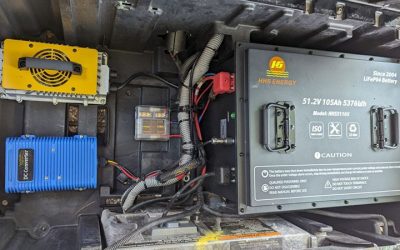
Install the new lithium battery (often a single unit replacing multiple lead-acid bricks).
-
Connect terminals (positive first) and install the new charger if needed -9.
Many owners report the upgrade transforms their cart’s feel and usability immediately.
Conclusion: The Verdict
For the majority of golf cart owners in 2026, lithium batteries are the better choice—provided you can manage the upfront investment.
They deliver:
-
5–10× longer life -5
-
2× the range per charge -9
-
Zero maintenance -1
-
Faster charging -6
-
Consistent, powerful performance from first hole to last -3
The higher initial cost is typically recovered within 2–3 years through eliminated replacements and reduced maintenance -2-9. For daily drivers, commercial fleets, and anyone who values their time, lithium isn’t just an upgrade—it’s a transformation.
Lead-acid batteries remain a viable, lower-cost entry point for occasional, budget-conscious users who don’t mind regular maintenance. AGM offers a middle ground for those wanting maintenance-free operation without lithium’s price tag.
The best battery isn’t the one with the best specifications on paper—it’s the one that aligns with your real-world usage, your budget, and your expectations -3. Use the framework above to choose confidently, and enjoy many miles of trouble-free carting.
Looking for quality lithium batteries from experienced manufacturers? Contact our team to discuss your specific golf cart needs and discover how a lithium upgrade can transform your driving experience.
Related articles