The Complete Guide to Understanding, Choosing, and Maximizing 48V Lithium Systems
Introduction: Why 48V Has Become the Gold Standard
If you’ve been researching golf cart batteries, you’ve likely noticed one voltage mentioned more than any other: 48 volts. From premium new carts to aftermarket upgrades, 48V lithium systems have emerged as the dominant force in the industry—and for good reason.
The shift to 48V isn’t arbitrary. It represents the sweet spot where performance, efficiency, and practicality converge. Whether you’re considering an upgrade or simply want to understand what makes 48V lithium systems so special, this comprehensive guide will illuminate every aspect of this transformative technology.
In this article, we’ll explore:
-
Why 48V has become the standard voltage
-
The specific advantages of 48V lithium over other voltages
-
Real-world performance benefits you’ll actually notice
-
How to choose the right 48V lithium battery for your needs
-
What the future holds for 48V technology
Let’s dive into the electrifying world of 48V lithium power.
Part 1: Understanding Voltage in Golf Cart Applications
1.1 A Brief History of Golf Cart Voltages
Golf carts have evolved significantly since their introduction in the 1930s. Battery voltage has followed a clear progression:
| Era | Typical Voltage | Battery Configuration |
|---|---|---|
| 1950s–1970s | 36V | Six 6V batteries in series |
| 1980s–2000s | 36V (standard), 48V (premium) | Six 6V or six 8V batteries |
| 2010s–Present | 48V dominant | Four 12V or six 8V, now lithium |
Why the shift to 48V? Higher voltage systems deliver more power with less current, reducing energy losses and allowing smaller, more efficient wiring .
1.2 How Voltage Affects Performance
The relationship between voltage, current, and power follows a simple formula:
Power (Watts) = Voltage (Volts) × Current (Amps)
For a given power requirement:
-
Higher voltage = Lower current
-
Lower voltage = Higher current
Why This Matters:
Lower current means:
-
Less heat generation in cables and components
-
Smaller, lighter wiring can be used
-
Reduced energy losses during operation
-
Higher efficiency overall
This is why 48V systems outperform their 36V counterparts in nearly every metric .
Part 2: The Specific Advantages of 48V Lithium Systems
2.1 Superior Power Delivery
The Torque Difference:
A 48V lithium battery delivers significantly more torque than a 36V system—approximately 33% more at the same current draw . This translates to:
-
Faster acceleration from stops
-
Better hill-climbing ability with full payloads
-
Improved performance with larger tires or lifted carts
-
Responsive throttle feel at any speed
Real-World Impact:
Drivers upgrading from 36V to 48V lithium consistently report that their carts feel “transformed”—peppier, more responsive, and capable of tackling hills that previously required a running start .
2.2 Extended Range
Range is where 48V lithium truly separates from lower-voltage alternatives.
| System | Typical Range (Miles) | Notes |
|---|---|---|
| 36V Lead-Acid | 15–25 miles | Declines as batteries age |
| 36V Lithium | 25–35 miles | Better efficiency, usable capacity |
| 48V Lead-Acid | 20–30 miles | Heavier, less efficient |
| 48V Lithium | 40–60+ miles | Optimal efficiency and capacity |
Why 48V Lithium Offers More Range:
-
Higher efficiency: Less energy lost as heat
-
Greater usable capacity: 80–90% vs. 50% for lead-acid
-
Lighter weight: 150–250 pounds less than lead-acid
-
Consistent voltage: Full power throughout discharge
For golfers, this means 36 holes on a single charge is easily achievable with a quality 48V lithium system. For neighborhood users, it means multiple days of casual driving between charges .
2.3 Higher Top Speed
While golf carts are typically speed-limited for safety, 48V systems naturally support higher speeds when controllers allow .
The Physics:
-
36V system: Typical top speed 12–14 mph
-
48V system: Typical top speed 18–22 mph (controller permitting)
Many aftermarket controllers specifically designed for 48V lithium can unlock speeds of 25–30 mph for off-road or private property use—though always check local regulations .
2.4 Better Hill-Climbing Performance
This advantage is immediately noticeable in hilly terrain.
The Science:
Climbing hills requires torque. Torque in electric motors is directly related to available voltage and current. With 33% more voltage than 36V systems, 48V delivers proportionally more torque to the wheels .
Real-World Experience:
On steep grades, a 48V lithium cart maintains speed while a 36V cart slows. Coming from a stop on an incline, the 48V cart pulls away smoothly while the 36V cart struggles .
2.5 Improved Efficiency and Reduced Heat
Remember our power formula: Power = Voltage × Current.
For the same power output, a 48V system draws 25% less current than a 36V system . This has multiple benefits:
| Benefit | Why It Matters |
|---|---|
| Less heat in cables | Safer operation, longer component life |
| Reduced voltage drop | More power reaches the motor |
| Smaller wiring possible | Lighter, easier to route |
| Less stress on controller | Longer controller life |
2.6 Compatibility with Modern Components
The golf cart industry has standardized around 48V for modern components .
What’s Optimized for 48V:
-
Motor controllers: Most aftermarket performance controllers are 48V-optimized
-
Chargers: The widest selection of quality chargers is for 48V systems
-
DC-DC converters: Readily available for 12V accessory power
-
BMS units: Sophisticated 48V BMS technology is mature and reliable
Choosing 48V ensures you have access to the broadest ecosystem of compatible components .
2.7 Future-Proofing Your Investment
As the industry continues evolving, 48V has emerged as the de facto standard .
Why 48V Is Here to Stay:
-
Automotive influence: Many hybrid and mild-hybrid vehicles use 48V systems
-
Manufacturing focus: Battery manufacturers concentrate R&D on 48V
-
Component availability: The aftermarket supports 48V most extensively
-
Regulatory acceptance: 48V is widely recognized and accepted
Investing in 48V lithium today means your battery will be compatible with future upgrades and replacement components .
Part 3: 48V Lithium vs. Other Voltages – A Detailed Comparison
3.1 48V Lithium vs. 36V Lithium
| Comparison Point | 48V Lithium | 36V Lithium | Advantage |
|---|---|---|---|
| Top Speed | 18–22+ mph | 12–14 mph | 48V |
| Acceleration | Faster | Moderate | 48V |
| Hill Climbing | Excellent | Good | 48V |
| Range | 40–60 miles | 25–35 miles | 48V |
| Cost | Higher | Lower | 36V |
| Component Availability | Excellent | Good | 48V |
Verdict: 36V lithium is a viable budget option for flat terrain and moderate use, but 48V delivers superior performance in every category .
3.2 48V Lithium vs. 48V Lead-Acid
| Comparison Point | 48V Lithium | 48V Lead-Acid | Advantage |
|---|---|---|---|
| Weight | 60–100 lbs | 250–350 lbs | Lithium |
| Usable Capacity | 80–90% | 50% | Lithium |
| Cycle Life | 2,000–5,000+ | 300–500 | Lithium |
| Maintenance | None | Regular watering, cleaning | Lithium |
| Upfront Cost | $2,500–$4,500 | $800–$1,500 | Lead-Acid |
| 10-Year Cost | $2,700–$5,200 | $3,000–$5,500 | Lithium |
Verdict: Lithium wins on performance and long-term value; lead-acid wins only on upfront price .
3.3 48V Lithium vs. 72V Systems
Some high-performance carts use 72V systems, typically for racing or extreme applications.
| Comparison Point | 48V Lithium | 72V Lithium | Notes |
|---|---|---|---|
| Performance | Excellent | Extreme | 72V for racing only |
| Cost | Moderate | Very High | 72V requires specialized components |
| Availability | Widespread | Limited | 48V is mainstream |
| Practicality | Daily driver | Specialized use | 72V is overkill for most |
Verdict: 72V makes sense only for dedicated performance builds. 48V is the practical choice for 99% of users .
Part 4: Real-World Performance Benefits
4.1 What 48V Lithium Feels Like Behind the Wheel
Numbers on paper are one thing. The driving experience is another entirely.
The “Lithium Difference”:
When you press the accelerator of a 48V lithium-powered cart:
-
Instant response: No hesitation, immediate torque
-
Smooth acceleration: Linear power delivery without surges
-
Consistent feel: Same response at 10% charge as at 100%
-
Quiet operation: No clicking solenoids, just silent power
Owner Testimonials:
“My 48V lithium cart climbs hills my old lead-acid cart couldn’t even attempt. It’s like driving a different vehicle.” – Florida golf course owner
“I get three full rounds of golf on a single charge. My buddies with lead-acid are swapping carts after 18 holes.” – Arizona golfer
4.2 Hills and Steep Terrain
For those in hilly areas, 48V lithium is transformative.
The Hill-Climbing Test:
On a measured 15% grade:
-
48V lithium: Maintains 12 mph with two passengers
-
36V lithium: Maintains 8 mph with two passengers
-
48V lead-acid: Maintains 6 mph, slowing as batteries drain
The difference becomes more pronounced with heavier loads or steeper grades .
4.3 Heavy Loads and Towing
If you use your cart for utility purposes—hauling tools, towing trailers, carrying heavy loads—48V lithium delivers:
-
Full torque even with maximum payload
-
No performance degradation as batteries discharge
-
Ability to handle loads that would strain lower-voltage systems
4.4 Cold Weather Performance
While lithium has charging restrictions below freezing, 48V lithium systems actually outperform lead-acid in cold weather during discharge :
| Temperature | 48V Lithium Capacity | 48V Lead-Acid Capacity |
|---|---|---|
| 70°F (20°C) | 100% | 100% |
| 32°F (0°C) | 95% | 80% |
| 0°F (-18°C) | 80% (discharge only) | 50% |
For cold-climate users who store batteries indoors or use self-heating models, 48V lithium maintains superior cold-weather range .
Part 5: Choosing the Right 48V Lithium Battery
5.1 Capacity Options
48V lithium batteries are available in various capacities, typically measured in amp-hours (Ah).
| Capacity | Typical Range | Best For |
|---|---|---|
| 48V 60–70Ah | 25–35 miles | Light use, flat terrain, budget builds |
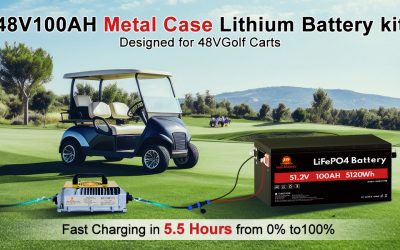
| 48V 100–105Ah | 40–50 miles | Most users, standard golf courses |
| 48V 150–160Ah | 55–70 miles | Heavy users, long distances, commercial |
| 48V 200Ah+ | 70+ miles | Extreme range needs, fleet operations |
The Sweet Spot: For most recreational golfers and neighborhood users, 48V 100–105Ah offers the best balance of range, weight, and cost .
5.2 Form Factors
48V lithium batteries come in several physical configurations:
Single Pack:
-
One unit replacing all lead-acid batteries
-
Simplest installation
-
Typically 100–160Ah capacity
-
Weight: 60–100 lbs
Modular System:
-
Multiple smaller units connected in series or parallel
-
Flexible placement options
-
Can be easier to handle (lighter individual units)
-
May offer redundancy
Drop-In Replacement:
-
Designed to exactly match lead-acid footprint
-
Fits existing battery trays without modification
-
Ideal for simple upgrades
5.3 Key Features to Look For
| Feature | Why It Matters |
|---|---|
| Quality BMS | Protects against overcharge, over-discharge, temperature extremes |
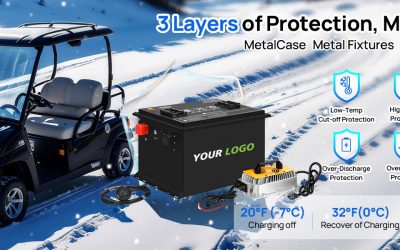
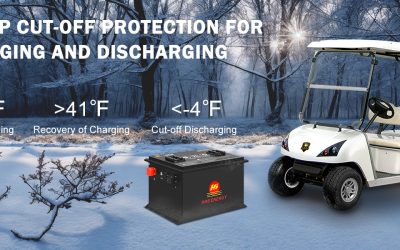
| Low-Temperature Protection | Prevents charging below freezing (essential for cold climates) |
| Bluetooth Monitoring | Check state of charge, cell balance from your phone |
| Built-in 12V Output | Simplifies powering lights and accessories |
| Heavy-Duty Terminals | Ensure reliable connections with high currents |
| Metal Case | Better heat dissipation, physical protection |
| IP Rating | Water and dust resistance for outdoor use |
5.4 Matching to Your Cart
Voltage Confirmation:
Ensure your cart’s motor and controller are compatible with 48V. Most modern carts are, but some older 36V carts may require controller upgrades .
Physical Fit:
Measure your battery compartment carefully. Lithium batteries are often smaller than lead-acid banks, but verify dimensions.
Connection Type:
Check terminal type (stud, bolt, post) and size to ensure compatibility with your cables.
Part 6: Installation Considerations
6.1 What’s Involved in Upgrading to 48V Lithium
If you’re moving from 36V lead-acid to 48V lithium, the process typically includes:
-
Remove old batteries and clean compartment
-
Install new 48V lithium battery (secure mounting)
-
Connect main cables (may need new cables if terminal types differ)
-
Install 48V lithium charger (required—never use old charger)
-
Add DC-DC converter if your cart has 12V accessories and battery lacks built-in output
-
Test all systems before regular use
6.2 Common Challenges and Solutions
| Challenge | Solution |
|---|---|
| Old cables don’t fit new terminals | Replace with appropriate cables or use adapter lugs |
| Battery compartment too large | Use foam padding or custom mounting brackets |
| Accessories not working | Install DC-DC converter if needed |
| Charging port incompatible | Replace port or use adapter |
| Controller needs reprogramming | Consult cart dealer or manufacturer |
6.3 Professional vs. DIY Installation
| Approach | Pros | Cons |
|---|---|---|
| DIY Installation | Save labor cost, learn your system | Requires time, tools, confidence |
| Professional Installation | Guaranteed proper setup, warranty support | Added cost ($200–$500) |
Most mechanically inclined owners can handle 48V lithium installation in 2–4 hours with basic tools .
Part 7: Charging Your 48V Lithium Battery
7.1 Charger Requirements
Essential: Use only a lithium-specific 48V charger.
| Charger Feature | Why It Matters |
|---|---|
| Correct voltage | 48V lithium requires specific charge profile |
| Communication | Some chargers talk to BMS for optimal charging |
| Amperage rating | Higher amps = faster charging (but verify battery acceptance) |
| Temperature compensation | Adjusts for cold conditions (if battery supports) |
7.2 Charging Times
| Charger Amperage | Charge Time (100Ah battery) |
|---|---|
| 10A | 10–12 hours |
| 15A | 6–8 hours |
| 20A | 4–6 hours |
| 25A+ | 2–4 hours |
Note: Charging time depends on starting state of charge and battery’s maximum acceptance rate .
7.3 Charging Best Practices
-
Partial charges are fine – No need to fully discharge
-
Avoid frequent 100% charges – 80–90% is ideal for daily use
-
Full charge monthly – Allows BMS cell balancing
-
Never charge below freezing – Unless battery has built-in heating
Part 8: Maintenance and Care
8.1 What You DON’T Need to Do
Celebrate your freedom from:
-
Watering batteries
-
Cleaning corrosion
-
Equalization charges
-
Terminal maintenance
8.2 What You SHOULD Do
| Task | Frequency |
|---|---|
| Visual inspection | Monthly |
| Check connections tightness | Quarterly |
| Monitor BMS via app | Weekly |
| Full charge cycle | Monthly |
| Store at 50–80% if unused | Before storage |
8.3 Maximizing Lifespan
-
Avoid deep discharges – Recharge at 20–30%
-
Keep cool – Heat accelerates aging
-
Use correct charger – Always
-
Store properly – During off-season
With proper care, your 48V lithium battery should deliver 8–12+ years of reliable service .
Part 9: Cost Analysis and ROI
9.1 Upfront Investment
| Component | Typical Cost |
|---|---|
| 48V 105Ah Lithium Battery | $2,200–$3,500 |
| 48V Lithium Charger | $200–$500 |
| DC-DC Converter (if needed) | $50–$150 |
| Installation (if professional) | $200–$500 |
| Total Investment | $2,650–$4,650 |
9.2 Long-Term Savings
| Cost Category | Lead-Acid (10 Years) | Lithium (10 Years) | Savings |
|---|---|---|---|
| Battery replacements | $2,400–$4,500 | $0 | $2,400–$4,500 |
| Maintenance (time/value) | $600–$1,200 | $0–$100 | $500–$1,200 |
| Charging efficiency | Higher | Lower | $100–$300 |
| Total 10-Year Cost | $3,000–$5,700 | $2,700–$4,750 | $300–$950 savings |
ROI Timeline: Most users recover the higher upfront cost within 2–3 years through eliminated battery replacements and reduced maintenance .
Part 10: The Future of 48V Lithium Technology
10.1 Emerging Innovations
The 48V lithium space continues to evolve:
-
Higher energy density: More range in same physical size
-
Faster charging: 1–2 hour full charges becoming possible
-
Improved BMS: Smarter, more communicative systems
-
Integrated heating: Self-warming batteries for cold climates
-
Better integration: Seamless communication with cart electronics
10.2 Sustainability Advances
-
Improved recyclability: Easier to recover materials
-
Longer life: New chemistries approaching 10,000 cycles
-
Second-life applications: Retired cart batteries powering stationary storage
10.3 Should You Wait?
Technology always improves, but today’s 48V lithium batteries are mature, reliable, and offer compelling value. Waiting for “the next big thing” means missing years of benefits from upgrading now .
Conclusion: Is 48V Lithium Right for You?
The 48V lithium advantage is clear:
✓ Superior power and torque for hills and acceleration
✓ 40–60+ miles of range on a single charge
✓ Consistent performance from full to empty
✓ Zero maintenance and 8–12+ year lifespan
✓ Lower long-term cost despite higher upfront investment
✓ Industry-standard voltage with broad component support
48V lithium makes the most sense if:
-
You use your cart regularly (weekly or more)
-
You value performance and consistency
-
You want to eliminate battery maintenance
-
You plan to keep your cart 3+ years
-
You drive on varied terrain (especially hills)
Consider alternatives only if:
-
Upfront budget is extremely tight
-
You use your cart very infrequently
-
You cannot accommodate cold-weather charging restrictions
-
You plan to sell the cart within 1–2 years
The Bottom Line
The power of 48V lithium golf cart batteries isn’t just marketing hype—it’s measurable, noticeable, and transformative. From the instant torque when you press the accelerator to the satisfaction of never checking water levels again, 48V lithium delivers on its promises.
Whether you’re upgrading an existing cart or purchasing a new one, choosing 48V lithium means choosing the best available technology for performance, convenience, and long-term value. The initial investment pays dividends in every mile driven, every hill climbed, and every year of maintenance-free operation.
Discover the power for yourself. Your golf cart—and your driving experience—will never be the same.
Ready to experience 48V lithium power? Contact our team to discuss the right battery for your specific cart and usage patterns.