Yes — technically, you can connect four 12-volt batteries in series to create a 48-volt system for your golf cart.
But here’s the more important question:
Should you do it?
In most modern upgrades, especially when switching to lithium, it is usually better to install a single 48V lithium battery instead of wiring four 12V batteries together. Below, we’ll explain why.
How Four 12V Batteries Create 48V
When you connect batteries in series, the voltage adds up while the amp-hours (Ah) remain the same.
Example:
-
12V + 12V + 12V + 12V = 48V
-
If each battery is 100Ah → the system remains 100Ah
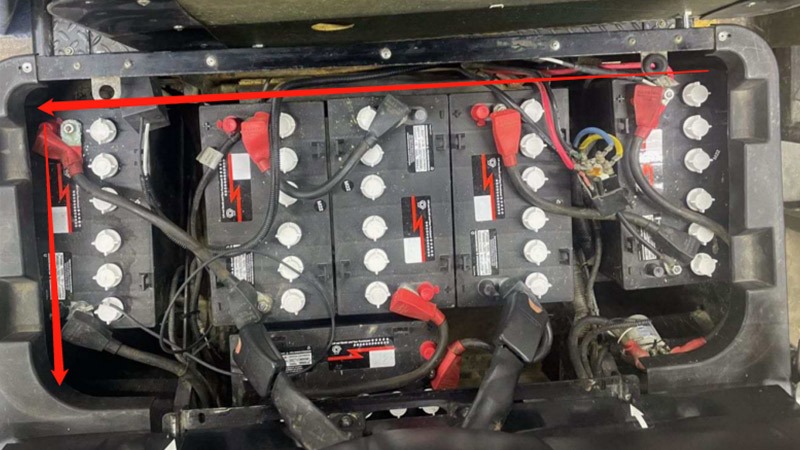
This configuration is commonly used in traditional lead-acid setups for carts from brands like Club Car, E-Z-GO, and Yamaha.
However, just because it works doesn’t mean it’s the best solution — especially in 2025.
Why Using Four 12V Batteries Is Not Ideal
1️⃣ Battery Imbalance Problems
When you wire four separate 12V batteries together:
-
Each battery has its own internal resistance
-
Each battery ages differently
-
Charging/discharging can become uneven
Over time, one battery may:
-
Drain faster
-
Charge slower
-
Overheat
-
Fail earlier than the others
Once one battery weakens, the entire pack performance drops.
This is one of the biggest long-term reliability issues with multi-battery setups.
2️⃣ More Wiring = More Failure Points
Four batteries require:
-
Multiple interconnect cables
-
Additional terminal connections
-
More corrosion risk
-
More voltage drop across cables
Every connection point is a potential failure point.
In contrast, a single 48V lithium battery:
-
Uses fewer cables
-
Has fewer loose terminals
-
Reduces electrical resistance
-
Improves system efficiency
Simpler systems are more reliable systems.
3️⃣ BMS Coordination Issues (For Lithium 12V Batteries)
If you’re using four 12V lithium batteries, each battery has its own BMS (Battery Management System).
The problem?
Those BMS units do not communicate with each other.
If one battery:
-
Reaches low voltage cutoff early
-
Overheats
-
Enters protection mode
It can shut down independently — causing sudden power loss even if the other three batteries are fine.
A single 48V lithium battery uses one centralized BMS that manages all cells evenly, preventing mismatch and unexpected shutdowns.
4️⃣ Charging Complications
Four 12V batteries often require:
-
Balanced charging
-
Careful monitoring
-
Occasional equalization (for lead-acid)
Improper charging leads to:
-
Shortened lifespan
-
Capacity loss
-
Premature failure
A dedicated 48V lithium battery uses a properly matched 48V charger designed for the pack’s internal configuration — improving longevity and charging efficiency.
5️⃣ Weight Distribution & Space Efficiency
Four 12V batteries:
-
Take up more space
-
Add more weight
-
Create uneven tray loading
A single 48V lithium battery:
-
Is significantly lighter
-
Frees up tray space
-
Improves acceleration
-
Reduces strain on suspension
Weight reduction alone can noticeably improve performance.
Why Direct 48V Lithium Batteries Are Recommended
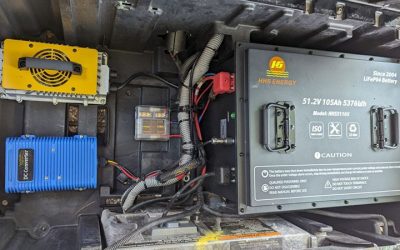
Modern golf cart battery manufacturers design complete 48V solutions specifically for cart systems.
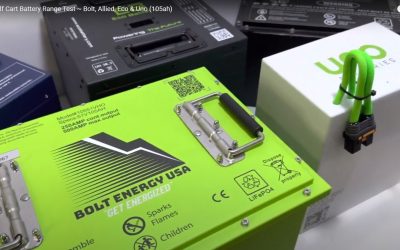
Brands like:
-
ECO Battery
-
Bolt Energy
-
ROYPOW
-
Allied Lithium
-
HHS Golf Energy
offer purpose-built 48V lithium systems engineered for:
-
Golf cart controllers
-
High torque loads
-
Regenerative braking
-
Hill climbing
-
Long daily runtime
These are not just stacked 12V batteries — they are integrated 51.2V (nominal) lithium systems optimized for performance.
Performance Comparison: 4×12V vs Single 48V Lithium
| Feature | 4×12V Batteries | Single 48V Lithium |
|---|---|---|
| Wiring Complexity | High | Low |
| BMS Coordination | Separate | Unified |
| Failure Risk | Higher | Lower |
| Weight | Heavier | Lighter |
| Installation | More connections | Cleaner setup |
| Lifespan | Moderate | Long-term |
| Monitoring | Limited | Often Bluetooth-enabled |
The difference becomes especially noticeable in:
-
Hill performance
-
Speed consistency
-
Long-distance driving
-
Fleet applications
When Is 4×12V Acceptable?
Using four 12V batteries may still make sense if:
-
You’re replacing an existing lead-acid setup on a tight budget
-
You already own compatible 12V batteries
-
Your cart sees very light usage
But for serious upgrades, especially lithium conversions, most professionals recommend installing a single 48V battery system.
Long-Term Cost Consideration
While four 12V batteries may seem cheaper initially, consider:
-
Replacement frequency
-
Maintenance costs
-
Wiring repairs
-
Downtime
-
Uneven wear
A quality 48V lithium battery can last 8–10 years, often outlasting multiple sets of lead-acid batteries.
Over time, the total cost of ownership usually favors the integrated 48V system.
Final Verdict
Yes — you can put four 12-volt batteries in your 48-volt golf cart.
But if you’re upgrading, especially to lithium, it’s strongly recommended to install a single 48V lithium battery system instead.
You’ll benefit from:
-
Better reliability
-
Simplified wiring
-
Centralized BMS protection
-
Longer lifespan
-
Improved performance
-
Cleaner installation
In today’s golf cart market, direct 48V lithium batteries are no longer a luxury — they are becoming the standard for efficient, modern power.